An Atlas of Money · All entries
Bolivian silver in the Argentine interior
Supported Little disputed
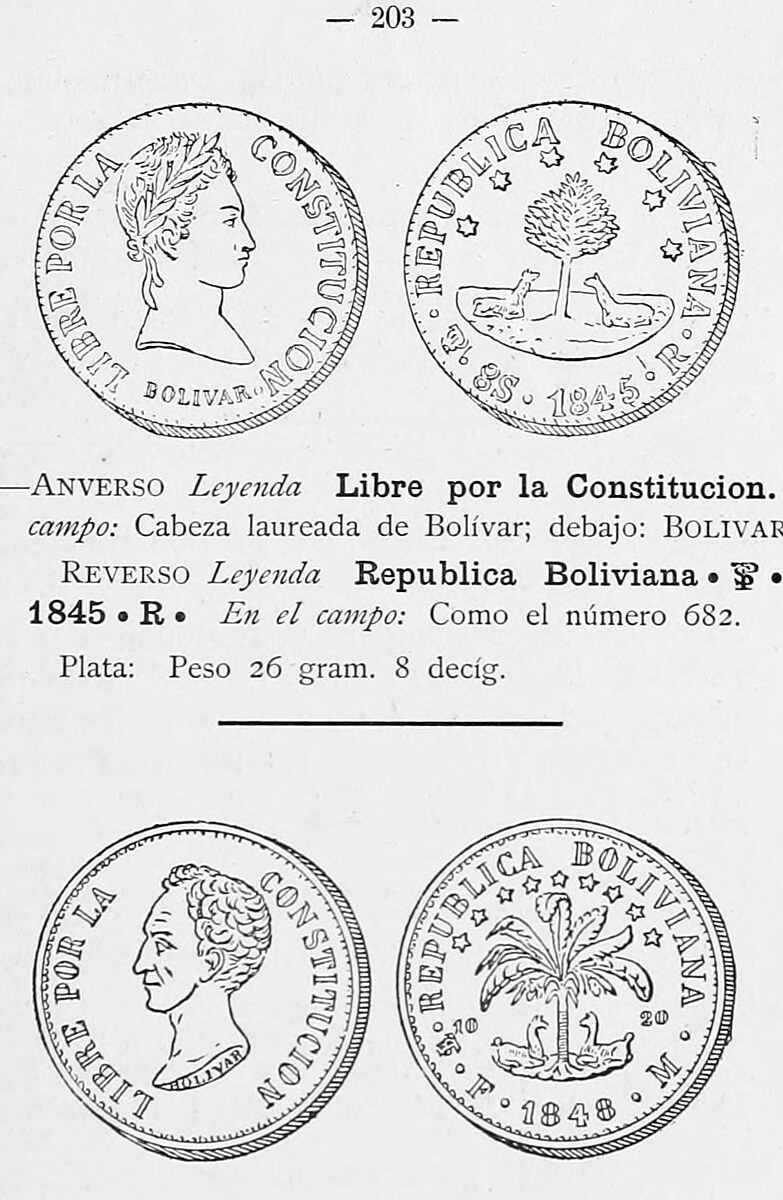
Open on the mapBy the 1840s Bolivian silver coins were so abundant in the interior provinces of present-day Argentina that they acquired the status of legal tender there. Bolivia was debasing its coinage in these decades.
Adopted by a state, not issued by it
No one's debt
Claims and evidence
By the 1840s Bolivian silver coins were so abundant that they acquired the status of legal tender in the interior provinces of present-day Argentina, where they had a different rate of exchange. Chilean gold circulated in Mendoza and Brazilian reals in Corrientes and Entre Ríos. Supported Little disputed
“By the 1840s Bolivian silver coins were so abundant that they acquired the status of legal tender in the interior provinces of present day Argentina, where they had a different rate of exchange.”
Maria Alejandra Irigoin, Gresham on Horseback: The Monetary Roots of Spanish American Political Fragmentation in the Nineteenth Century, LSE Economic History Working Paper 96/06 (December 2006), p. 21“Chilean gold circulated also in Mendoza, as Brazilian reals did in Corrientes and Entre Rios.”
Maria Alejandra Irigoin, Gresham on Horseback: The Monetary Roots of Spanish American Political Fragmentation in the Nineteenth Century, LSE Economic History Working Paper 96/06 (December 2006), p. 21
Bolivia began debasing its silver coinage in 1830, and in the 1860s all its pesos were feeble or debased. The monetary diversity of the provinces lasted until the gold peso was adopted as the national unit in 1881. Supported Little disputed
“Debasement as a monetary policy of the Bolivian government began in 1830”
Maria Alejandra Irigoin, Gresham on Horseback: The Monetary Roots of Spanish American Political Fragmentation in the Nineteenth Century, LSE Economic History Working Paper 96/06 (December 2006), p. 18“In the 1860s all the Bolivian pesos were feeble or debased”
Maria Alejandra Irigoin, Gresham on Horseback: The Monetary Roots of Spanish American Political Fragmentation in the Nineteenth Century, LSE Economic History Working Paper 96/06 (December 2006), p. 18“Indeed monetary diversity lasted until 1881 when the ‘gold peso’ was adopted as a national monetary unit”
Maria Alejandra Irigoin, Gresham on Horseback: The Monetary Roots of Spanish American Political Fragmentation in the Nineteenth Century, LSE Economic History Working Paper 96/06 (December 2006), p. 21