An Atlas of Money · All entries
Barbados: 1708 ban on enslaved people selling and bartering
Attested Little disputed
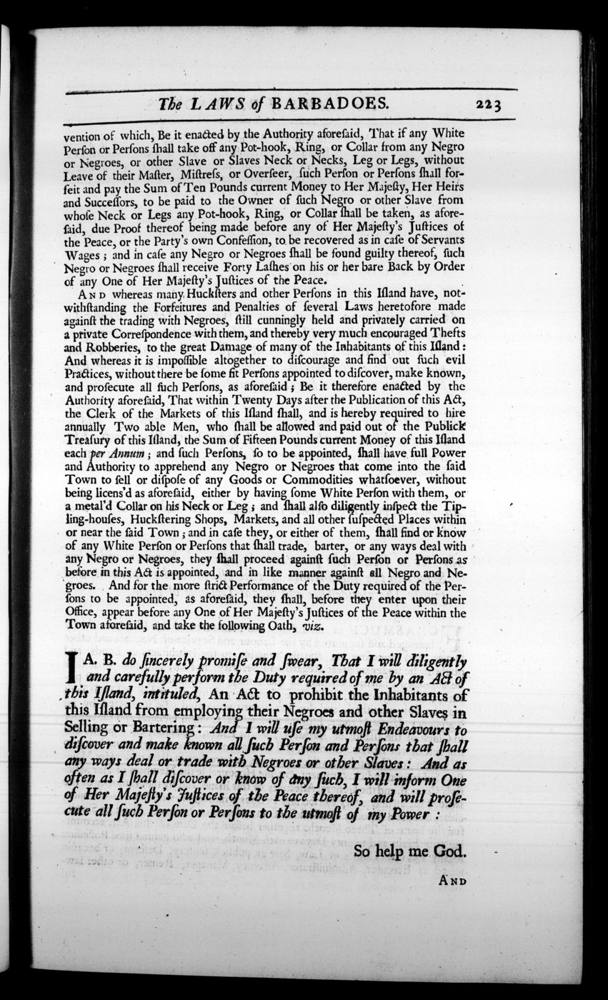
Open on the mapAn Act of 11 May 1708 says enslaved people were being sent daily to the towns to sell livestock, corn, fruit and other goods, and were trading among themselves. It banned this on pain of whipping and fined free buyers 5 pounds current money. Selling to their own owners was still allowed, and so was selling milk, horse-meat and firewood if the seller wore a metal collar. The Act also aimed at hucksters who traded with enslaved people despite earlier laws.
Used despite state rules
No one's debt
Claims and evidence
The preamble records an existing trade by enslaved people in the towns, including trade among themselves. Attested Little disputed
“under colour of which they traffick among themſelves”
Hall (ed.), Acts of Barbados (1764), No. 116, 'An Act to prohibit the Inhabitants of this Island from employing their Negroes or other Slaves, in selling or bartering', passed 11 May 1708, Act No. 116, preamble“forfeit and pay the ſum of five pounds current money of this Iland”
Hall (1764), Act No. 116, Act No. 116, cl. I (penalty on white buyers)“from ſelling Milk, Horſe- meat, or Fire-wood to any”
Hall (1764), Act No. 116, Act No. 116, proviso“many Huckſters and other perſons in this Iſland have, not- withſtanding the forfeitures and penalties of ſeveral Laws heretofore made againſt the trading with Negroes”
Hall (1764), Act No. 116, Act No. 116, cl. VIII