An Atlas of Money · All entries
Preslav treasure: Byzantine silver kept unspent
Supported Little disputed
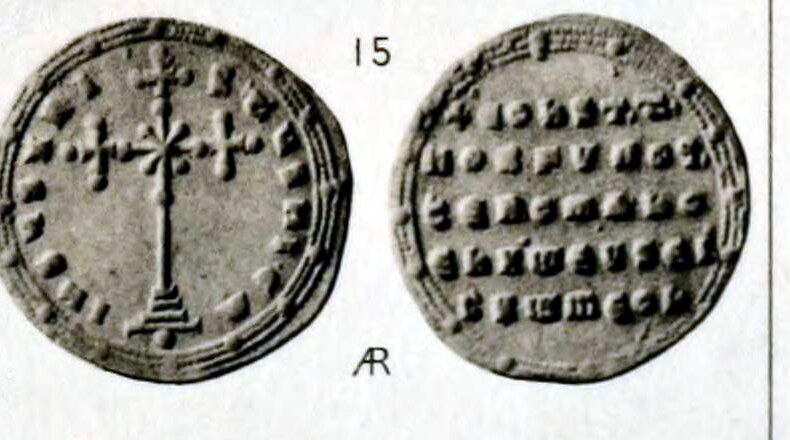
Open on the mapThe Preslav gold treasure, buried in 971, holds fifteen silver miliaresia of Constantine VII and Romanos II (945–959), a coin hardly ever found in Bulgaria. Penchev reads them as a Byzantine money gift to a member of a Bulgarian embassy.
Adopted by a state, not issued by it
No one's debt
Claims and evidence
The Preslav treasure contains fifteen Byzantine silver miliaresia of the 10th century. Miliaresia of Constantine VII with Romanos II are practically not found elsewhere in present-day Bulgaria. Attested Little disputed
“comprises fifteen silver Byzantine coins (miliarensia) from the 10th c.”
V. Penchev, 'What the coins from the Preslav treasure can tell us about the social status of its owner', Contributions to Bulgarian Archaeology 12 (2022) 69-74, doi:10.53250/cba12.69-74, p. 69“The silver miliarensia of Constantine VII with Romanos II are practically not found in present-day Bulgarian territory.”
V. Penchev, 'What the coins from the Preslav treasure can tell us about the social status of its owner', Contributions to Bulgarian Archaeology 12 (2022) 69-74, doi:10.53250/cba12.69-74, p. 70
Penchev argues that the coins were a gift to a member of a Bulgarian embassy, of the kind the Book of Ceremonies records for Olga's party in 946. Supported
“The coins from the treasure were most probably a gift to a member of a Bulgarian”
V. Penchev, 'What the coins from the Preslav treasure can tell us about the social status of its owner', Contributions to Bulgarian Archaeology 12 (2022) 69-74, doi:10.53250/cba12.69-74, p. 72