An Atlas of Money · All entries
Gaochang, c. 574-700: Sasanian silver coins as the oasis's money
Supported Little disputed
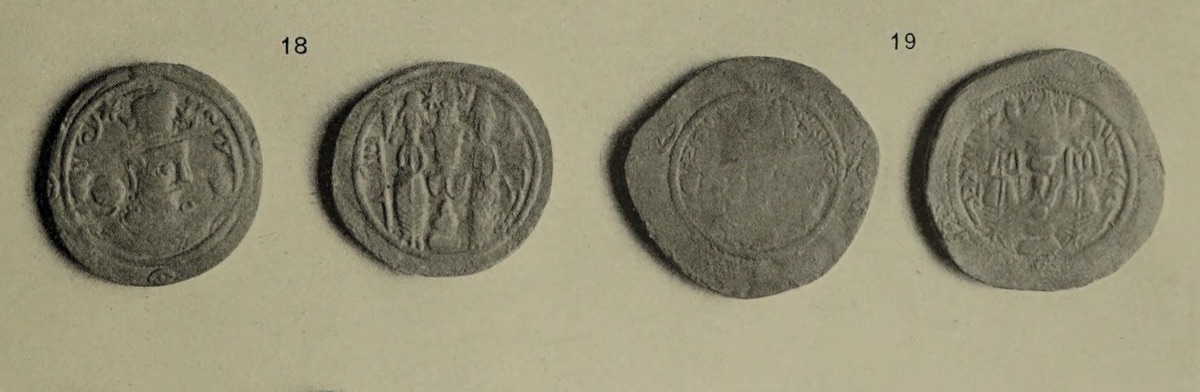
Open on the mapFrom the late 500s to about 700, Turfan's main coin was Sasanian silver, struck by no power that ruled the oasis; it set rents and fines and outlived the Sasanian state by about fifty years.
Adopted by a state, not issued by it
No one's debt
Claims and evidence
From the late 500s until about 700, Turfan's main coin was a foreign one: Sasanian silver, struck by no power that ruled the oasis. Of 35 land leases from 584-640, 11 set the rent in silver coins and 15 in grain. The Gaochang government assessed fines in silver coins in 574, valuing a bolt of brocade at 50 coins. In 630 the Gaochang king gave the pilgrim Xuanzang 100 ounces of gold, 30,000 silver coins and 500 bolts of silk. A Sogdian contract of 639 sells a slave girl for 120 'very pure' silver coins. The coins stayed in use after the Sasanian empire fell in 651: the soldier Zuo Chongxi (d. 673) still lent silver coins at about 10 per cent a month, and in 692 one silver coin was worth 32 Chinese copper coins. Supported Little disputed
“In this period, large quantities of Sasanian silver coins entered Turfan, and it seems likely that they displaced textiles in many transactions. An additional 35 contracts survive for the leasing of land between 584 and 640; the rents are denominated in grain (15 examples), silver coins (11 examples) or the information is missing (6)”
Hansen & Rong, JRAS 23.2 (2013), p. 289, after the land-lease table in H. Wang, Money on the Silk Road (2004), table 33, p. 289“as accessory, [Zhang] Agou harboured Long Zhe[zhina's] 1 bolt of tipo (Deva) jin brocaded silk, equal to 50 [silver coins]”
Record of fines for harbouring stolen goods, Gaochang kingdom, 574 (67TAM84:20, Tulufan chutu wenshu II.2), Hansen & Rong's translation, JRAS 23.2 (2013), Appendix, Document 2, lines 6-7, p. 298“100 ounces of gold, 30,000 silver coins and 500 bolts of plain silk and silk twill”
Huili, Biography of the Tripitaka Master Xuanzang, transl. Li Rongxi (1995), p. 33, as relayed by Hansen & Rong, JRAS 23.2 (2013), p. 289, p. 289“documenting the sale in 639 of a female slave for 120 "very pure" silver coins”
Sogdian slave-sale contract from Astana, 639 (transl. Yoshida Yutaka, T'oung Pao 89, 2003), as relayed by Hansen & Rong, JRAS 23.2 (2013), p. 290, p. 290“Six contracts are for straightforward loans of silver coins (in amounts ranging from 10 to 48) and charge interest of around 10 per cent each month”
Contracts from the tomb of Zuo Chongxi (64TAM4), as relayed by Hansen & Rong, JRAS 23.2 (2013), p. 292, p. 292“The silver coins are Sasanian silver coins, while the copper coins are Chinese, or locally made coins. In Turfan Chinese bronze coins replaced Sasanian silver coins only around 700”
Hansen & Rong, JRAS 23.2 (2013), p. 292, on the ledger of Zuo Chongxi (after Skaff 1998), p. 292