An Atlas of Money · All entries
Vijayanagar, c. 1505–18: the gold pardao, current beyond the kingdom
Attested Little disputed
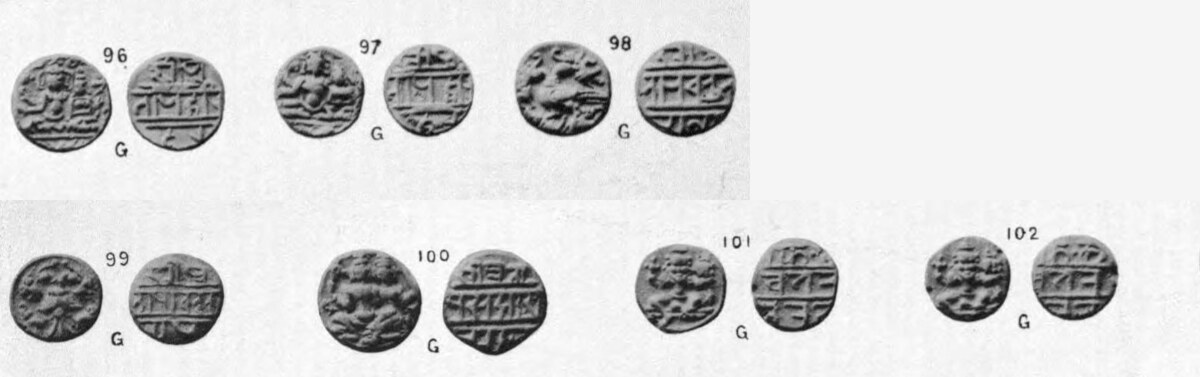
Open on the mapThe gold pardao of Vijayanagar passed well beyond the kingdom. Barbosa (c. 1516) says all merchandise in the capital was bought and sold by pardaos; that, in a passage found only in Ramusio's text, the coin was used over the whole of India and its gold was rather base; and that those struck there had never been found false, while many struck elsewhere were. He found pardaos current at Bhatkal at 320 reis and in Gujarat at about 300. Varthema (1505) saw the pardai paid at Goa, stamped with two figures on one side and letters on the other. Outside Vijayanagar nothing in these texts shows anyone made to take it.
State-issued
No one's debt
Claims and evidence
Barbosa writes that all the merchandise in Vijayanagar was bought and sold by pardaos, and that the pardaos struck there had never been found false, whereas many from other places were. Attested Little disputed
“All this merchandize is bought and sold by pardaos.”
The Book of Duarte Barbosa, transl. M. L. Dames, vol. I (Hakluyt Society, 1918), vol. I, p. 203“Those of this place are perfectly genuine, not one of them has been ever found false, nor is now so found, whereas many of other places are (false).”
The Book of Duarte Barbosa, transl. M. L. Dames, vol. I (Hakluyt Society, 1918), vol. I, p. 204
In a passage of Ramusio's text, Barbosa adds that the coin was used over the whole of India and current in all those kingdoms, and that its gold was rather base. Attested Little disputed
“and over the whole of India they make use of this coin, which is current in all these kingdoms. The gold is rather base.”
The Book of Duarte Barbosa, transl. M. L. Dames, vol. I (Hakluyt Society, 1918), vol. I, p. 204 (Ramusio interpolation)
Pardaos were current outside the kingdom: in Gujarat at about three hundred reis, and at Bhatkal at 320 reis. Attested Little disputed
“The coins of the King of Narsyngua are also current here, that is to say pardaos worth three hundred reis more or less.”
The Book of Duarte Barbosa, transl. M. L. Dames, vol. I (Hakluyt Society, 1918), vol. I, p. 156“Pardaos are current there, that is to say, the gold coin of the kingdom, They are worth here 320 reis.”
The Book of Duarte Barbosa, transl. M. L. Dames, vol. I (Hakluyt Society, 1918), vol. I, p. 191
Varthema writes that Goa paid the king of the Deccan ten thousand gold ducats a year in pardai, smaller than the seraphim of Cairo but thicker, stamped with two figures on one side and letters on the other. Attested Little disputed
“which pays annually to the king of Decan ten thousand golden ducats, called by them pardai. These pardai are smaller than the seraphim of Cairo, but thicker, and have two devils stamped upon one side of them, and certain letters on the other.”
The Travels of Ludovico di Varthema, A.D. 1503 to 1508, transl. J. W. Jones, ed. G. P. Badger (Hakluyt Society, 1863), pp. 115-116