An Atlas of Money · All entries
Buccaneer and pirate articles: shares paid in pieces of eight
Attested Little disputed
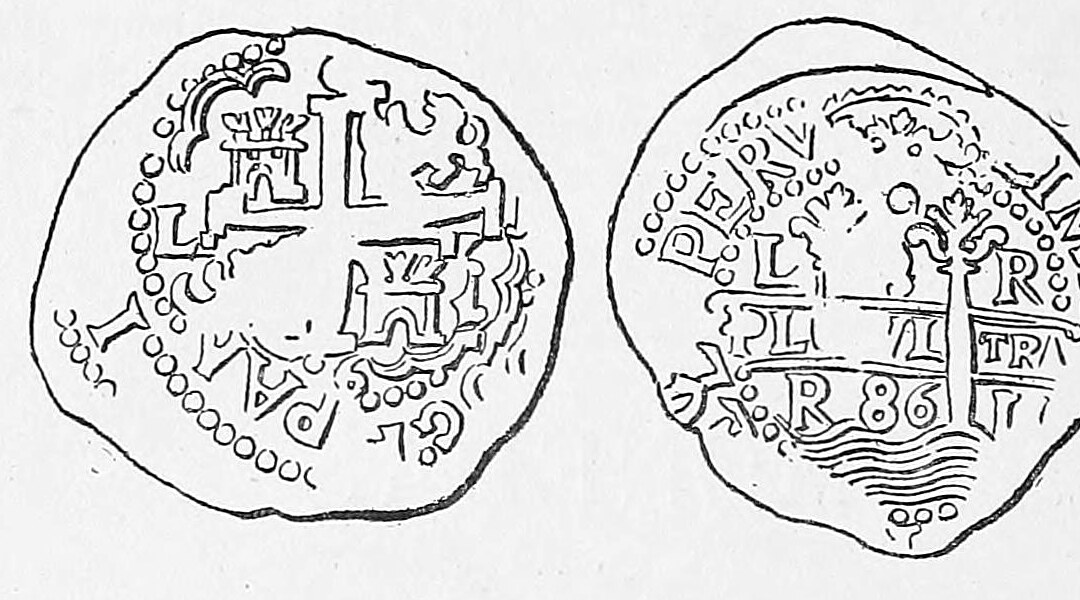
Open on the mapBuccaneer crews swore to written articles before a voyage and were paid from a common stock of plunder: 'No prey, no pay'. Shares, wages and compensation for wounds were reckoned in pieces of eight, with enslaved people as an alternative payment. Pirate crews of the 1720s kept the same system.
Used despite state rules
No one's debt
Claims and evidence
Exquemelin, among the buccaneers from 1666 to 1672, says their law was 'No prey, no pay'. Compensation was set in pieces of eight or slaves: 600 pieces of eight or six slaves for a right arm, 100 or one slave for an eye. The captain took five or six shares to an ordinary seaman's one. Attested Little disputed
“for otherwise it is the same law, among these people, as with other Pirates, No prey, no pay.”
A. O. Exquemelin, The Buccaneers of America (Dutch 1678; English 1684), ed. H. Powell (London, 1893), Part I ch. VI, pp. 58-59“Thus they order for the loss of a right arm six hundred pieces of eight, or six slaves”
A. O. Exquemelin, The Buccaneers of America (Dutch 1678; English 1684), ed. H. Powell (London, 1893), Part I ch. VI, p. 59“for an eye one hundred pieces of eight, or one slave”
A. O. Exquemelin, The Buccaneers of America (Dutch 1678; English 1684), ed. H. Powell (London, 1893), Part I ch. VI, p. 59“Thus the Captain, or chief Commander, is allotted five or six portions to what the ordinary seamen have”
A. O. Exquemelin, The Buccaneers of America (Dutch 1678; English 1684), ed. H. Powell (London, 1893), Part I ch. VI, p. 60
Morgan's articles for the Panama expedition of 1670–71 gave 1,500 pieces of eight or fifteen slaves for the loss of both legs, at the injured man's choice. After Panama each man got about 200 pieces of eight, and the men openly accused Morgan of keeping the best jewels for himself. Attested Little disputed
“for the loss of both legs, they assigned one thousand five hundred pieces of eight or fifteen slaves, the choice being left to the election of the party”
A. O. Exquemelin, The Buccaneers of America (Dutch 1678; English 1684), ed. H. Powell (London, 1893), Part III ch. I, p. 189“two hundred pieces of eight per capita”
A. O. Exquemelin, The Buccaneers of America (Dutch 1678; English 1684), ed. H. Powell (London, 1893), Part III, pp. 237-238“that he had reserved the best jewels to himself.”
A. O. Exquemelin, The Buccaneers of America (Dutch 1678; English 1684), ed. H. Powell (London, 1893), Part III, p. 237
When L'Ollonais's crews shared out the plunder of Maracaibo at Cow Island, some time before 1669, they counted 260,000 pieces of eight in ready money. They weighed the uncoined plate at ten pieces of eight a pound, and priced the jewels badly, too high or too low. Attested Little disputed
“they found in ready money two hundred and threescore thousand pieces of eight.”
A. O. Exquemelin, The Buccaneers of America (Dutch 1678; English 1684), ed. H. Powell (London, 1893), Part II ch. II, p. 99“they weighed all the plate that was uncoined, reckoning after the rate of ten pieces of eight for every pound.”
A. O. Exquemelin, The Buccaneers of America (Dutch 1678; English 1684), ed. H. Powell (London, 1893), Part II ch. II, p. 99“The jewels were prized with much variety, either at too high or too low rates”
A. O. Exquemelin, The Buccaneers of America (Dutch 1678; English 1684), ed. H. Powell (London, 1893), Part II ch. II, p. 99
Morgan's men took Portobelo, before his Maracaibo raid of 1669, and the citizens paid 100,000 pieces of eight in ransom. At the dividend they counted 250,000 pieces of eight in ready money besides cloth, linen and silks. Attested Little disputed
“brought the entire sum of one hundred thousand pieces of eight to the Pirates, for a ransom”
A. O. Exquemelin, The Buccaneers of America (Dutch 1678; English 1684), ed. H. Powell (London, 1893), Part II ch. VI, p. 148“They found in ready money two hundred and fifty thousand pieces of eight, besides all other merchandizes, as cloth linen, silks, and other goods.”
A. O. Exquemelin, The Buccaneers of America (Dutch 1678; English 1684), ed. H. Powell (London, 1893), Part II ch. VI, p. 149
Johnson's General History (1724) prints the articles of later crews. Bartholomew Roberts's men were to get 800 dollars out of the common stock for a lost limb, and anyone who defrauded the company of a dollar's worth was marooned. John Phillips's articles gave 400 pieces of eight for a lost joint and 800 for a limb. Attested Little disputed
“he was to have 800 Dollars, out of the”
Capt. Charles Johnson, A General History of the Pyrates (London, 1724), Roberts, article IX“if they defrauded the Company to the Value of a Dollar, in Plate, Jewels, or Money”
Capt. Charles Johnson, A General History of the Pyrates (London, 1724), Project Gutenberg text, Roberts, article II“_If any Man shall lose a Joint in time of an Engagement, shall have_ 400 _Pieces of Eight; if a Limb_, 800.”
Capt. Charles Johnson, A General History of the Pyrates (London, 1724), Project Gutenberg text, Phillips, articles on board the Revenge, art. 8
Connections
- Buccaneers' spending and tavern credit in Jamaica and Tortuga
- Bahamas: wrecks, pirates and the pieces of eight they spent
- Spanish dollar (piece of eight) as world money
- Portobelo fair, 1637: silver wedges by weight
- Darien, 1681: buccaneers pay their Indian guides in goods
- Costa Rica: cacao as money, 1687–1738