An Atlas of Money · All entries
Ostrogothic coinage under Theoderic
Attested Little disputed
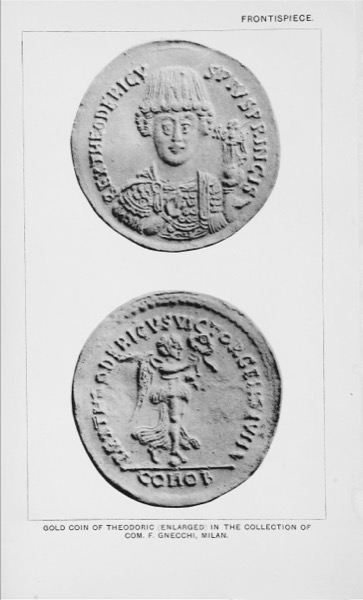
Open on the mapThe Ostrogothic kings minted in Italy. Theoderic's gold copied the imperial types; his silver carried the emperor's bust with his own monogram on the reverse. Cassiodorus's formula for the master of the mint condemns tampering with coin and requires full weight.
State-issued
No one's debt
Claims and evidence
The Ostrogothic kings minted in Italy. Theoderic's gold copied the imperial types; his silver carried the emperor's bust with his own monogram on the reverse. Cassiodorus's formula for the master of the mint condemns tampering with coin and requires full weight. Attested Little disputed
“His gold coinage is, as regards types and inscriptions, a reproduction of the contemporary Imperial money”
Wroth, Catalogue of the coins of the Vandals, Ostrogoths and Lombards ... in the British Museum (1911), Introduction, p. xxxi“custom and commercial convenience, quite as much as, or more than, reverence for the privileges of the emperor, induced the Barbarians to issue as their gold coinages mere imitations of the Imperial money.”
Wroth, Catalogue of the coins of the Vandals, Ostrogoths and Lombards ... in the British Museum (1911), Introduction, Vandals section, note on Procopius“Great is the crime of tampering with the coinage; a crime against the many--whose buying and selling is disturbed by it”
Hodgkin, The Letters of Cassiodorus (condensed translation of the Variae, 1886), Gutenberg #18590 (archive.org mirror), Variae VII.32, Formula of the Master of the Mint“Coins are to keep their full weight.”
Hodgkin, The Letters of Cassiodorus (condensed translation of the Variae, 1886), Gutenberg #18590 (archive.org mirror), Variae VII.32“It is your business to see that our face is imprinted on our coins”
Hodgkin, The Letters of Cassiodorus (condensed translation of the Variae, 1886), Gutenberg #18590 (archive.org mirror), Variae VI.7, Formula of the Comes Sacrarum Largitionum