An Atlas of Money · All entries
Punch-marked karshapanas
Attested Disputed
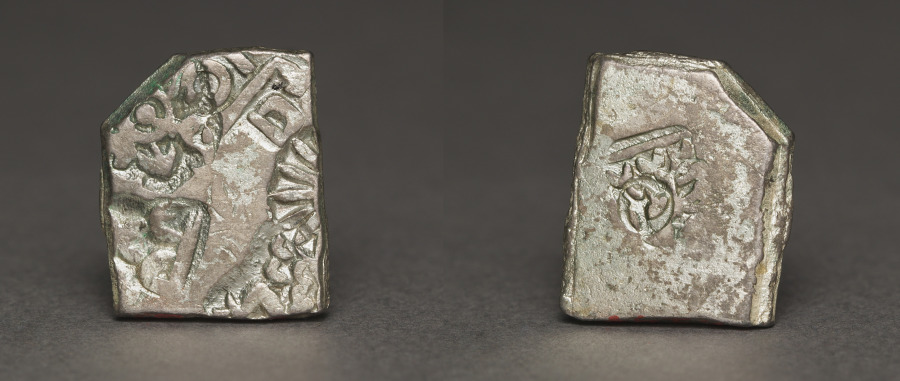
Open on the mapCunningham describes thousands of square silver pieces stamped with punches, found from the Himalaya to Cape Comorin. He argues they began as blank silver karsha weights that were then marked with punches, after a stage when silver was simply weighed out.
No one's debt
Claims and evidence
Cunningham describes thousands of square silver pieces stamped with punches, found from the Himalaya to Cape Comorin. He argues they began as blank silver karsha weights that were then marked with punches, after a stage when silver was simply weighed out. Attested Disputed
Contested by Dating is disputed. Cunningham (1891) put them in the 6th c. BC and possibly back to 1000 BC. Modern numismatists (e.g., J. Cribb) put the start in the 5th-4th c. BC, possibly derived from Achaemenid-period bent bars in Gandhara. The y0/y1 used here are a modern conventional range, not Cunningham's.
“first employed shortly after the old blank silver Karsha weights were marked with punches, and thus acquired the designation of tangka^ or "stamped" pieces.”
Cunningham, A., Coins of Ancient India from the Earliest Times down to the Seventh Century A.D. (1891), Introduction and pp. 42-43