An Atlas of Money · All entries
Taiwan, 1720s: the foreign silver coin preferred to fine silver
Attested Little disputed
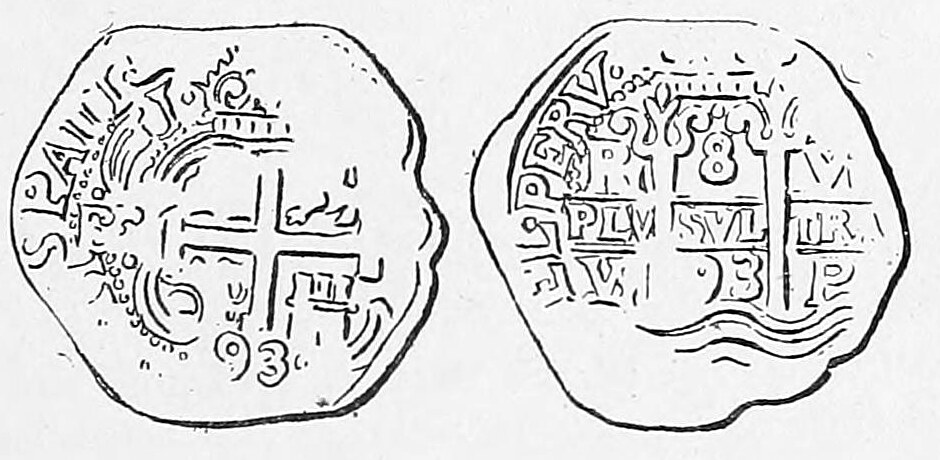
Open on the mapHuang Shujing, sent to Taiwan as censor in 1722, writes that traders there most esteemed the foreign coin, a silver coin of irregular shape, stamped with foreign letters, whose silver was poor; fine silver from the mainland, given instead, was often hard to pass. The copper cash then being cast, well made as they were, were refused in trade.
No state role recorded
No one's debt
Claims and evidence
Huang Shujing writes that in trade in Taiwan the foreign coin was most esteemed: a silver coin struck, he says, by the red-haired foreigners [the Dutch], long and slanting without regular shape, stamped with foreign letters, its silver low and poor; yet fine silver from the mainland, given in its place, was often hard to pass. Attested Little disputed
“交易最尚番錢,紅毛所鑄銀幣也。長斜無式,上印番字,銀色低潮;以內地兼金與之,反多滯難。”In trade the foreign coin is most esteemed: it is a silver coin struck by the red-haired [Dutch]. Long and slanting, without regular shape, stamped with foreign letters, its silver is low and poor; yet if one gives them fine silver from the interior, it is on the contrary often hard to pass. (translation for the atlas)
Huang Shujing 黃叔璥, Taihai shicha lu 臺海使槎錄 (1720s), juan 2, Notes from Chikan 赤嵌筆談, Customs 習俗
He adds that the copper coins then being cast, with well-made rims, were thrown aside and not used in trade. Attested Little disputed
“見行鼓鑄,輪郭周好,交易則棄而不用,亦足異矣!”The coins now being cast, with well-made rims, are thrown aside and not used in trade: strange indeed! (translation for the atlas)
Huang Shujing 黃叔璥, Taihai shicha lu 臺海使槎錄 (1720s), juan 2, Notes from Chikan 赤嵌筆談, Customs 習俗