Money in Uganda
Entries placed by today's borders.
Entries 5, in 2 eras
Span 1750–1911
Kinds of money Cowrie shells 4, Ivory 1, Glass beads 1, Cloth 1, Other commodity 1, and 2 others
W ithin present-day Uganda, the atlas places 5 entries, by their main place or a dated one, from 1750 to 1911. The oldest is Buganda: ivory discs (sanga) as currency (1750–1850); the most recent, Uganda Agreement, 1900: hut and gun tax (1900–1902). The money named most often is Cowrie shells, in 4 entries.
Early modern 1500–1899
4 entries, 1750–1911
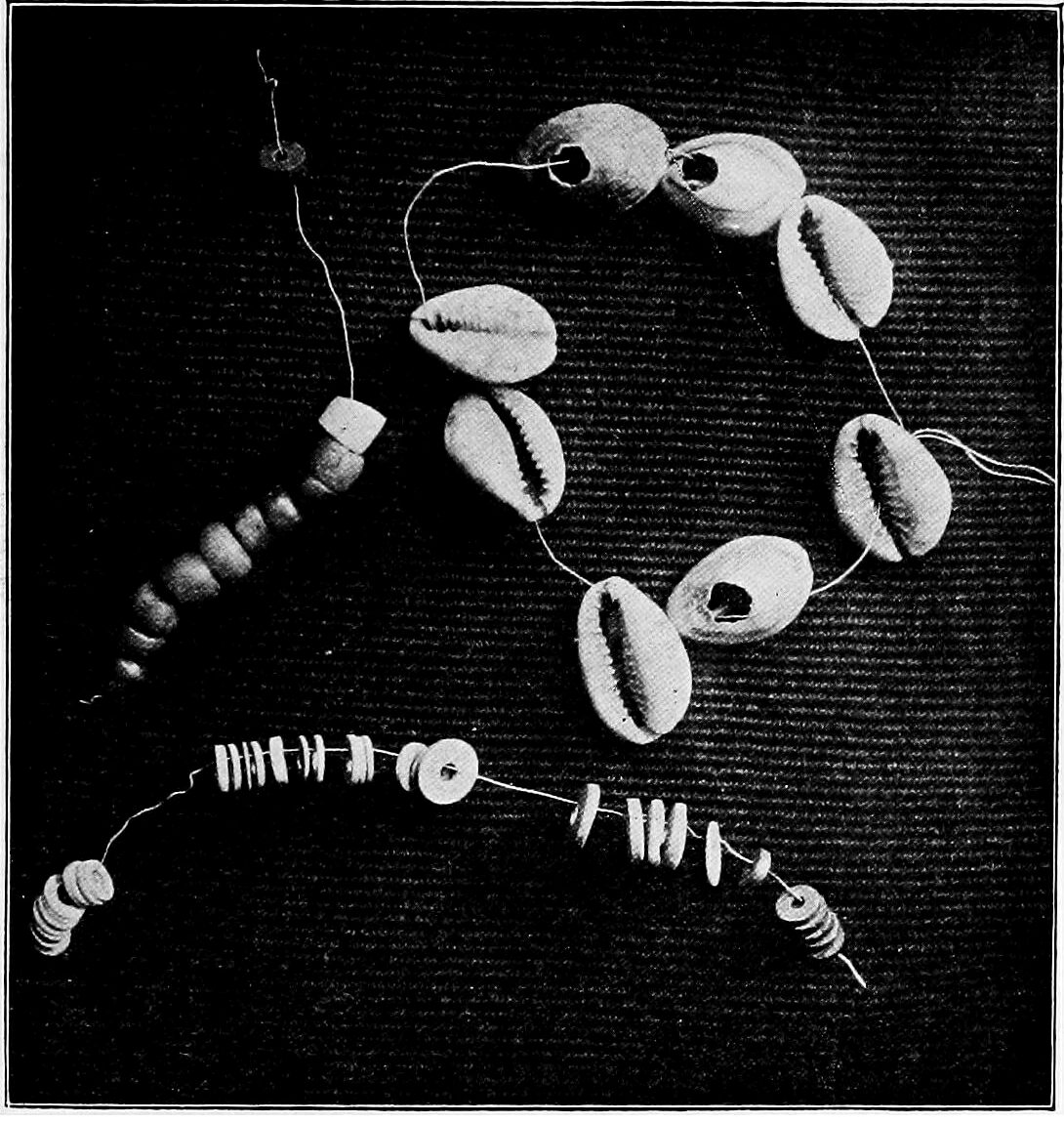
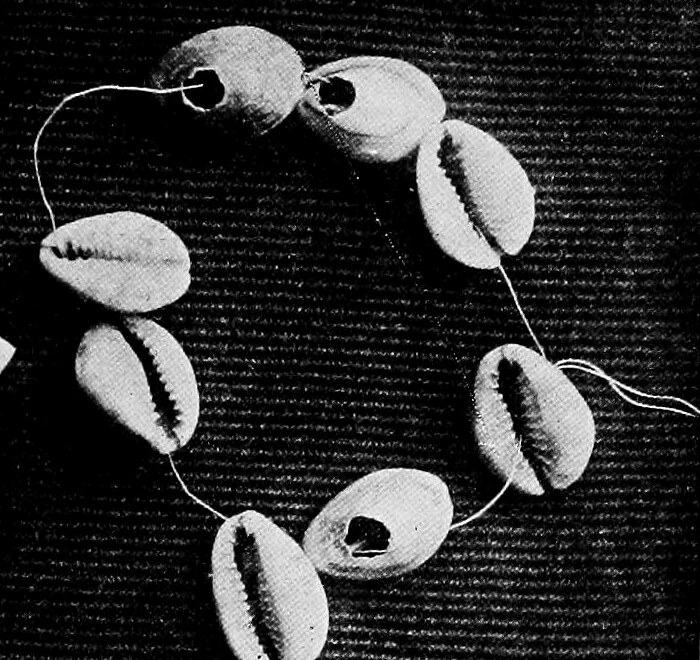
the discs which the King's men fashioned for use as currency.Roscoe, The Baganda (London, 1911)
Hollow marks: entries elsewhere that share this era's money (Cowrie shells, Glass beads, Ivory); the 4 farthest are listed below, not drawn.
List of entries (4, and 8 elsewhere)
- 1 Buganda: ivory discs (sanga) as currency 1750–1850
- 2 Bunyoro, 1862: cowries for cattle and coffee 1862
- 3 Buganda: cowrie prices and clan help with debts 1886–1911
- 4 IBEA Company caravans, 1890–92: food bought with beads, wire and cloth (today in Uganda) 1890–1892
Elsewhere
- a Congo Free State, 1891–1908: taxes in rubber and food, paid back in goods Upper Congo, 1891
- b Bondoukou: gold dust by weight, cowries for small change Bondoukou, 1888
- c Unyamwezi: beads, cloth and wire as currency Msene, 1857
- d Gabon: Fang iron bikei, and prices in ivory Fang country on the Ogowe, 1879
- Aleutian Islands, 1749-1764: tribute in sea-otter skins, child hostages, beads for skins Near, 1749
- Siam: the king ends cowrie money with lead tokens (1865) Bangkok, 1865
- Luang Prabang, 1867: cowrie strings in the market, cut silver to the north Luang Prabang, 1867
- Palauan bead money (udoud) Palau, 1871
Modern 1900 to today
1 entry, 1900–1902
All natives of Uganda were henceforth liable to pay a hut and a gun tax of the value of three rupees (4s.) each annually.H. H. Johnston, The Uganda Protectorate, vol. 1 (London, 1902), vol. 1, p. 250
Hollow marks: entries elsewhere that share this era's money (Rupee).
List of entries (1, and 4 elsewhere)
- 1 Uganda Agreement, 1900: hut and gun tax 1900–1902
Elsewhere
- a Todas: funeral gifts, in buffaloes and later rupees Nilgiri Hills, 1901
- b The Mahra country, c. 1900: frankincense sold for thalers and rupees Qishn, 1898
- c Oman, 1895–1914: the Maria Theresa thaler, the rupee and imaginary coins Muscat, 1895
- d Silver against gold, 1871–1935: what silver money lost in India and China India, 1871
What this cannot show
- How much money of each kind was in use: the marks count entries, not coins, notes or goods.
- A census: the atlas seeks out money made without a state, so an era with few entries is not an era with little money.
- The past's borders: entries are placed by today's, and the same money often ran beyond them; see the map.
Sources quoted on this page
- Roscoe, The Baganda (London, 1911)
- H. H. Johnston, The Uganda Protectorate, vol. 1 (London, 1902)