An Atlas of Money · All entries
Denmark 1813: the state bankruptcy and a forced mortgage on all land
Supported Little disputed
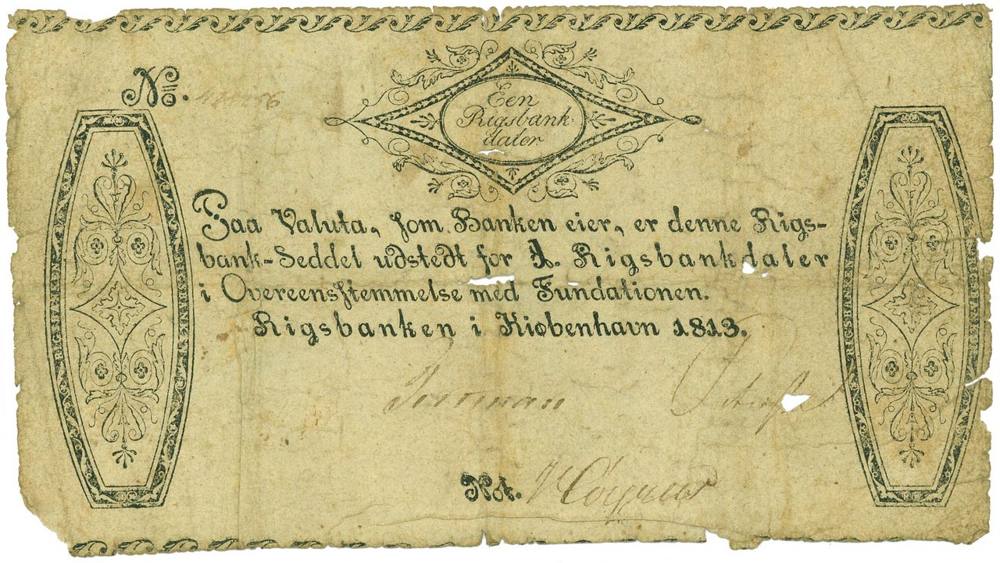
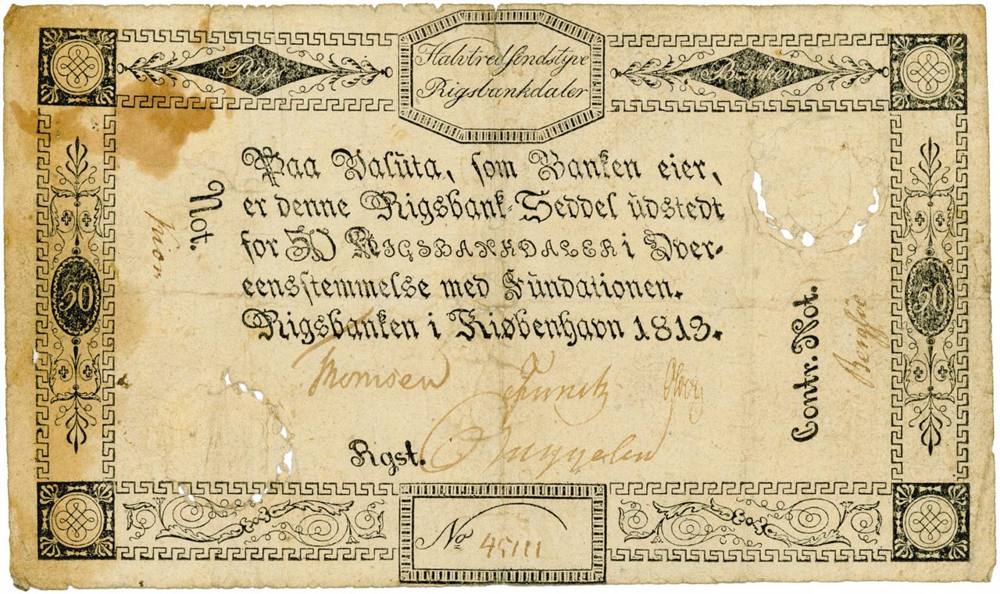
Open on the mapJensen (1896): Danish notes rose from 27 m rix-dollars (1807) to 142 m (1812), and a specie dollar came to cost 17-18 paper rix-dollars instead of 1¼. The decree of 5 Jan 1813 created the Rigsbank, cut Courant notes to one-tenth of face value and took a 6% first mortgage on all real estate as capital. The duchies won the right to insist on silver. The new notes still fell to 550-600:100 in 1814.
Imposed by the state
A claim on an issuer
Claims and evidence
War finance raised the note issue from 27 m rix-dollars in 1807 to 142 m by end-1812; a specie dollar cost 17-18 rix-dollars instead of 1¼. Supported Little disputed
“Whereas the amount of bank notes in 1807 reached the extraordinary sum of 27,000,000 rix-dollars”
Adolph Jensen, 'Banking in the Scandinavian Nations', in A History of Banking in All the Leading Nations, vol. 4 (New York 1896), p. 377, p. 377“a specie dollar, instead of representing one and a quar- ter rix-dollars, represented from seventeen to eighteen rix-dollars”
Jensen (1896), p. 377, p. 377
The decree of 5 January 1813 reduced the Courant notes to one-tenth of face value (cutting the public debt to match) and gave the new Royal Bank a 6% first mortgage on all real estate. Supported Little disputed
“The bankrupt proposition reduced the Courant notes to one-tenth of their nomi- nal value, and the public debt was correspondingly diminished”
Jensen (1896), p. 378, p. 378“which ordered that the Bank should have first mortgage rights on all real estate, at six per cent, of its value.”
Jensen (1896), p. 378, p. 378“yet silver might be insisted upon in payments (for the ducal countries).”
Jensen (1896), p. 378, p. 378