An Atlas of Money · All entries
Norway 1814-42: Riksbank notes collapse; Norges Bank built on a forced silver levy
Attested Little disputed
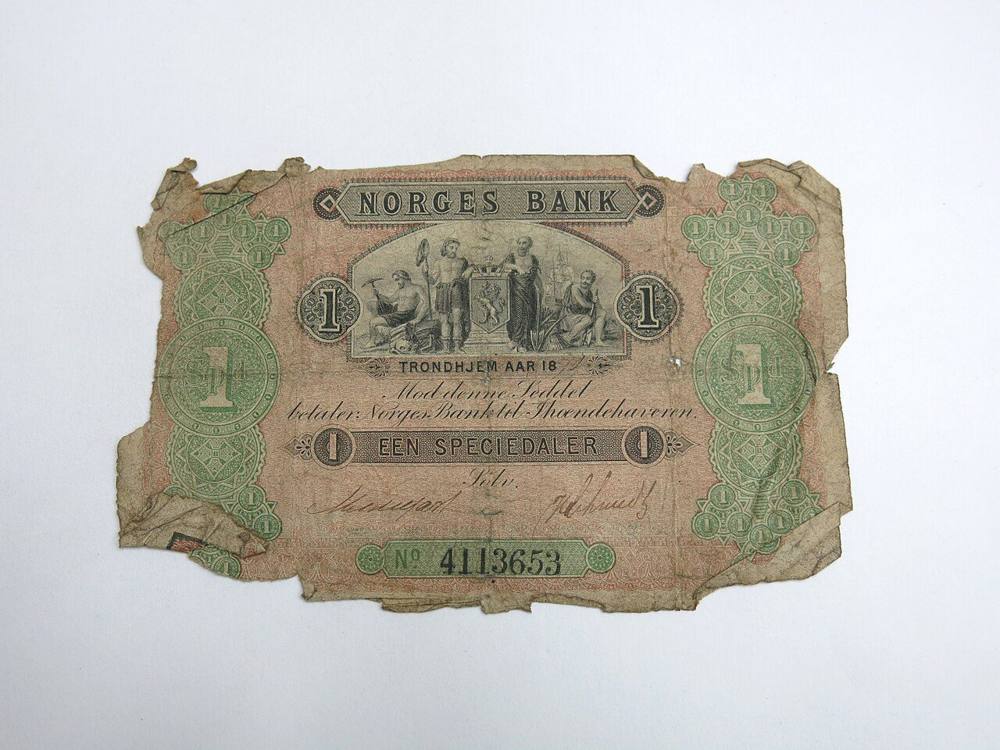
Open on the mapWithin six months of 1814, 375 paper Riksbank talers bought only 200 in silver. Norges Bank (1816) took the speciedaler as unit and gathered its silver reserve by a special 'silver tax': family silver and savings were handed over. Notes depreciated again (220:100 in 1822) and were redeemed at par only in 1842.
Imposed by the state
A claim on an issuer
Claims and evidence
Norway's 1814 Riksbank notes lost value fast: within six months 375 paper talers bought 200 silver talers. Supported Little disputed
“In six months their value fell from their nominal value in silver Riksbank talers to an exchange rate where a nominal value of 375 Riksbank talers in bank notes would purchase 200 Riksbank talers in silver coins.”
University of Oslo Coin Cabinet, 'Year 1814: The Central Bank of Norway and the "silver tax"' (web exhibition), Year 1814“instead of being equivalent to thirty- two Norwegian shillings in silver, had fallen to six shillings in silver”
Jensen (1896), p. 403, p. 403
To back the new bank's notes, a special 'silver tax' was levied: family silver and coin savings were handed over, alongside compulsory assessments on property. Attested Little disputed
“To build this reserve, a special "silver tax" was decreed. Large quantities of family silver and coins from personal savings were turned over to the silver fund.”
University of Oslo Coin Cabinet, 'Year 1814', Year 1814“The law provided that a new bank should be organized, and the requi- site means were to be procured partly through voluntary contributions and partly through compulsory assessments on property”
Jensen (1896), p. 404, p. 404
Convertibility was suspended in 1818; notes fell to 220:100 by 1822 and regained par only in 1841-42. Supported Little disputed
“the notes consequently depreciated from par value in 1818, to the rate of 220 to 100 in 1822.”
Jensen (1896), p. 404, p. 404“was not fulfilled until 1842.”
University of Oslo Coin Cabinet, 'Year 1814', Year 1814