An Atlas of Money · All entries
Viking-Age Denmark: silver paid by weight, hoards cut to øre units
Attested Disputed
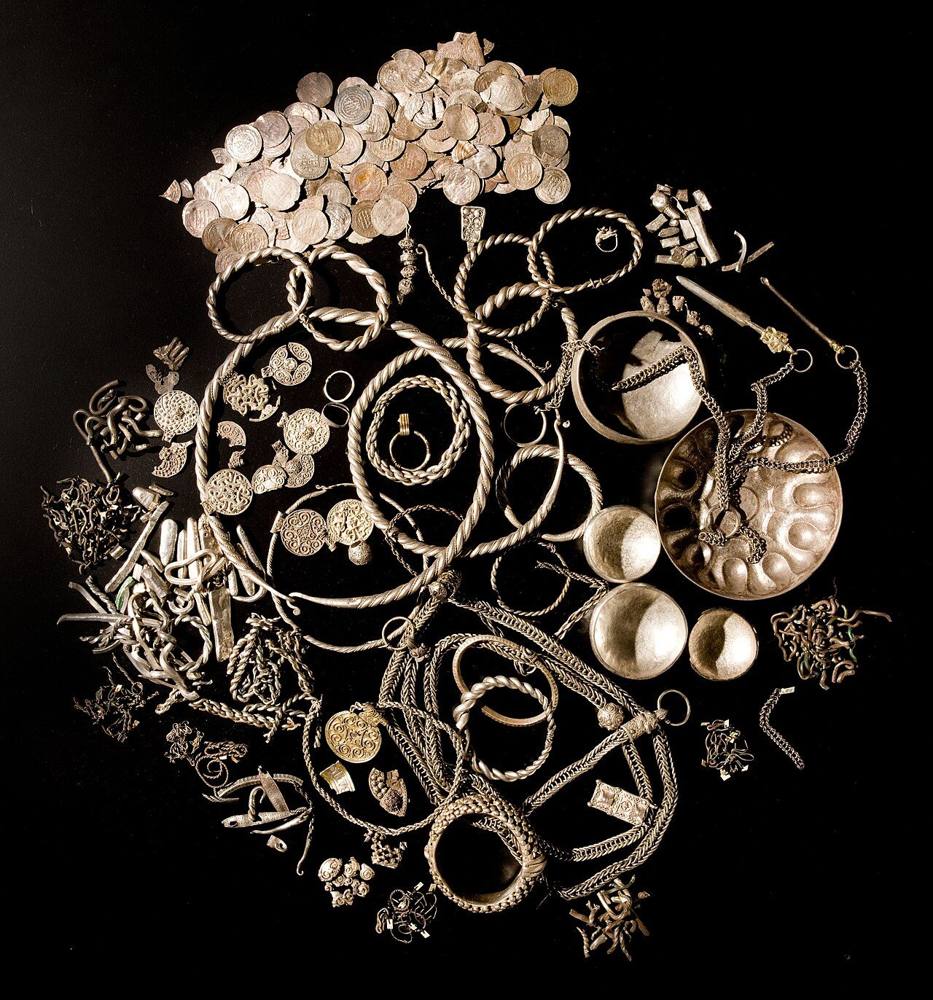
Open on the mapThe National Museum of Denmark describes Viking-Age silver as paid by weight, the required amount cut off; hoards such as Terslev (6.6 kg, 1751 coins, 1708 Arab) and Vester Vedsted (rings and bars weighed off to øre units) were mostly hidden stocks of value.
No state involved
No one's debt
Claims and evidence
Goods in Viking-Age Denmark were paid for in silver by weight, the needed amount being cut off; most hoards were stocks of valuables hidden in times of trouble, a few perhaps votive. Supported Disputed
Contested by Whether weighed hack-silver was money or only bullion is argued: the museum calls it the real currency, while Feveile (2025) shows that the same Danish lands had zones where coin passed by number (dk-ribe-hedeby-pennies).
“This metal was the real currency of the Viking Age. Goods were paid for in silver by weight. In a transaction the required amount of silver was simply cut off.”
National Museum of Denmark, 'The silver hoards of the Vikings' (web page, accessed 2026-11-17), main text“A few hoards may be votive offerings. Most of the finds seem to be stocks of valuables that were hidden, for example during times of trouble.”
National Museum of Denmark, 'The silver hoards of the Vikings', main text
At Vester Vedsted near Ribe, gold rings and silver bars had been weighed off to correspond to øre units (8, 4.2 and 24.5 g); the hoard also held Arab dirhams, the latest of 913-42. Attested Little disputed
“The gold rings and silver bars have been weighed off so they correspond to units in ører, weighing respectively 8, 4.2 and 24.5 grammes. The find also includes Arab silver coins, the latest of which is from 913-42.”
National Museum of Denmark, 'Hoard find from Vester Vedsted' (web page), main text
The Terslev hoard (Zealand) held 6.6 kg of silver including 1751 coins, 1708 of them Arab, buried in the later 10th century; silver reached Denmark in quantity only in the 900s, via Russia, and Arab coin gave way to western European coin at the end of that century. Attested Little disputed
“The silver hoard from Terslev in Zealand contains 6.6 kg of silver, including 1751 coins. 1708 of the coins are of Arab origin.”
National Museum of Denmark, 'The silver hoard from Terslev' (web page), main text“It was not until the 900s that it came to Denmark in large quantities.”
National Museum of Denmark, 'Silver's route to Denmark - trading with the Arab coins' (web page), main text“At the end of the 900s the flow of Arab coins stopped. Instead western European coins now found their way to Denmark.”
National Museum of Denmark, 'Silver's route to Denmark - trading with the Arab coins' (web page), main text