An Atlas of Money · All entries
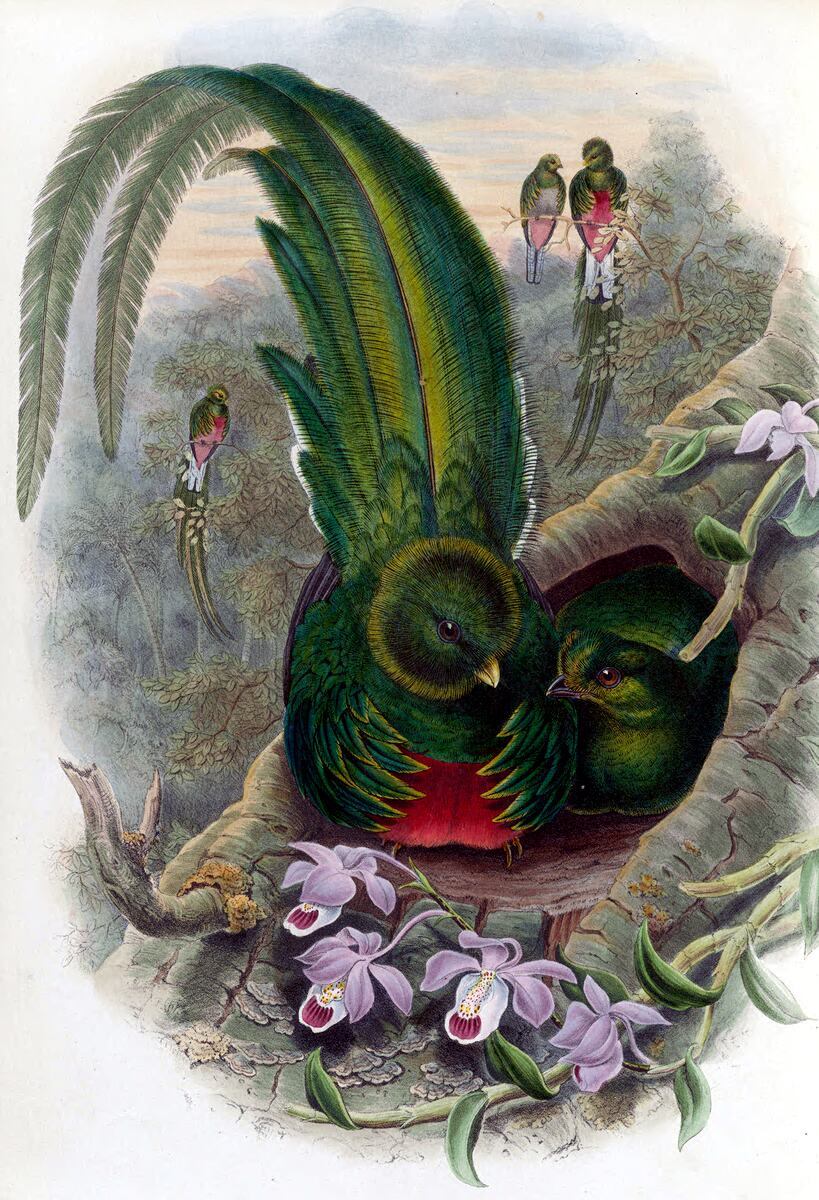
Verapaz: quetzal feathers used as money, the bird protected by law
Supported Little disputed
Open on the mapLas Casas writes that in Verapaz killing the quetzal was punished by death, because its feathers were of great value and the people used them as money. Fines were set in feathers and paid to the lord's treasury, tribute was a feather every forty or eighty days, and in the markets feathers were among the most esteemed goods, traded for gold. He relays what the Dominicans learned there after 1537.
Private, under state licence or control
No one's debt
Claims and evidence
Las Casas says that in the province of Verapaz killing a bird of the rich feathers (the quetzal) was punished by death, because the birds were found nowhere else and their feathers were of great value: the people used them as money, so killing one was held a great harm to the common good. Supported Little disputed
“En la provincia de la Vera Paz, de que luego en el siguiente capítulo se tractará, tenia pena de muerte el que matase pájaro de las plumas ricas, porque no los habia en otra parte y era cosa de muncho valor, porque usaban dellas como de moneda, y por consiguiente, habianlo por gran daño del bien comun.”In the province of Verapaz, of which the next chapter will treat, whoever killed a bird of the rich feathers was punished by death, because there were none elsewhere and it was a thing of great value, because they used them as money; and so they held it a great harm to the common good. (translation for the atlas)
Bartolomé de las Casas, Apologética historia (written c. 1555–59), ed. M. Serrano y Sanz, Historiadores de Indias, vol. I (Madrid, 1909), cap. CCXXXIV (laws of the Indians of Guatemala), p. 617
In Verapaz, fines were reckoned in feathers. Las Casas says the lord sentenced an offender to pay so many feathers, so much cacao or so many mantles, all of which went to his treasury; fornication with a widow or a slave cost sixty feathers, sometimes a hundred; adultery with a married woman a hundred feathers; theft of something of great value 'a hundred feathers, which were of value among them', and whoever could not pay was sold as a slave. Feathers stolen from another man's wood, where the birds were bred, had to be paid for with the same penalty. Supported Little disputed
“El señor mostraba muncho enojo y disimulaba el delicto hasta que lo sentenciaba en que pagase cierta pena, como tantas plumas, tanto cacao ó tantas mantas en que le condenaba, lo cual todo aplicaba para el fisco y su Cámara.”The lord showed great anger and let the offence pass until he sentenced the man to pay a certain penalty, such as so many feathers, so much cacao or so many mantles, all of which he applied to the treasury and his chamber. (translation for the atlas)
Bartolomé de las Casas, Apologética historia (written c. 1555–59), ed. M. Serrano y Sanz, Historiadores de Indias, vol. I (Madrid, 1909), cap. CCXXXIX (sins and crimes punished in Verapaz), p. 627“El que cometia fornicacion con viuda y con esclava, hacíanle pagar luego, algunas veces sesenta plumas, otras veces ciento, ó otras cosas semejantes. El que adulteraba con mujer casada, le daban la misma pena de las cient plumas”Whoever fornicated with a widow or with a slave was made to pay at once, sometimes sixty feathers, other times a hundred, or other such things. Whoever committed adultery with a married woman was given the same penalty of the hundred feathers (translation for the atlas)
Bartolomé de las Casas, Apologética historia (written c. 1555–59), ed. M. Serrano y Sanz, Historiadores de Indias, vol. I (Madrid, 1909), cap. CCXXXIX, p. 627“penábanlo en muncho más, como en cient plumas, que eran entre ellos de valor, y si no tenia de qué pagar vendíanlo por esclavo.”they fined him much more, as a hundred feathers, which were of value among them, and if he had nothing to pay with they sold him as a slave. (translation for the atlas)
Bartolomé de las Casas, Apologética historia (written c. 1555–59), ed. M. Serrano y Sanz, Historiadores de Indias, vol. I (Madrid, 1909), cap. CCXXXIX, p. 628“El que hurtaba plumas en el monte ajeno donde criaban los pájaros que las tienen, ó cacao, ó otra cosa semejante, se la hacian pagar con la pena ya dicha.”Whoever stole feathers in another's wood where they bred the birds that bear them, or cacao, or other such thing, was made to pay for it with the penalty already stated. (translation for the atlas)
Bartolomé de las Casas, Apologética historia (written c. 1555–59), ed. M. Serrano y Sanz, Historiadores de Indias, vol. I (Madrid, 1909), cap. CCXXXIX, p. 628
Tribute and dowry: Las Casas says that when lords married their children the towns gave the dowry in gold, feathers, cacao or fowls, and that the people paid in tribute a single feather every forty or eighty days. Supported Little disputed
“Cuando los señores casaban sus hijas ó hijos, el dote daban los pueblos en oro, ó en plumas, ó en cacao, ó en gallinas. Tributaban tambien cada cuarenta ó ochenta dias una sola pluma.”When the lords married their daughters or sons, the towns gave the dowry in gold, or in feathers, or in cacao, or in fowls. They also paid as tribute a single feather every forty or eighty days. (translation for the atlas)
Bartolomé de las Casas, Apologética historia (written c. 1555–59), ed. M. Serrano y Sanz, Historiadores de Indias, vol. I (Madrid, 1909), cap. CCXXXVI (first government of these peoples, Verapaz), p. 621
Markets: Las Casas says the Verapaz markets, held near the temples, worked by exchanging one thing for another: maize for beans, beans for cacao; cotton mantles for gold and copper axes, and gold for emeralds, turquoises and feathers, 'which are among the most esteemed merchandise'. Supported Little disputed
“su manera de contractar era comutando unas cosas por otras, que es la natural: daban mahiz por frísoles, y frísoles por cacao”their way of dealing was exchanging some things for others, which is the natural way: they gave maize for beans, and beans for cacao (translation for the atlas)
Bartolomé de las Casas, Apologética historia (written c. 1555–59), ed. M. Serrano y Sanz, Historiadores de Indias, vol. I (Madrid, 1909), cap. CCXXXVII (government of Verapaz), p. 623“comutan mantas de algodon por oro y por hachuelas de cobre, y oro por esmeraldas y turquesas y plumas, que son de las mercaderías más estimadas.”they exchange cotton mantles for gold and for little copper axes, and gold for emeralds and turquoises and feathers, which are among the most esteemed merchandise. (translation for the atlas)
Bartolomé de las Casas, Apologética historia (written c. 1555–59), ed. M. Serrano y Sanz, Historiadores de Indias, vol. I (Madrid, 1909), cap. CCXXXVII, p. 623
Fuentes y Guzmán, writing about 1690 from tradition, says that under the old law of Guatemala the wives, children and kin of a convicted conspirator were made slaves and sold for feathers, cacao and mantles at a public sale. Supported Little disputed
“que se vendían por plumas, cacao y mantas”who were sold for feathers, cacao and mantles (translation for the atlas)
F. A. de Fuentes y Guzmán, Recordación Florida (written c. 1690), ed. J. Zaragoza, Historia de Guatemala, vol. 1 (Madrid, 1882), book I ch. IV, p. 30
Sahagún says the province of Zinacantlan produced amber and the long feathers called quetzalli, because many quetzal birds lived there; the disguised Mexica merchants (naoaloztomeca) bought them with obsidian blades and lancets, needles, bells, cochineal, alum, red ochre and skeins of rabbit hair, and in the same way obtained rich feathers such as quetzal, xiuhtototl and chalchiuhtototl. Attested Little disputed
“En esta provincia de Tzinacantlan se hace el ambar, y tambien plumas muy largas que llaman quetzalli”In this province of Tzinacantlan amber is made, and also very long feathers which they call quetzalli (translation for the atlas)
Bernardino de Sahagún, Historia general de las cosas de Nueva España, ed. C. M. de Bustamante, vol. 2 (México, 1829), Libro IX, cap. V, p. 355“Estos mercaderes que se llamaban Naoaloztomeca, compraban estas cosas dichas, rescatabanlas con navajas de itztli, y con lancetas del mismo, con ahujas, y cascabeles, con grana y piedra álumbre, con almagre y unas madejas que se llaman tochivitl, hechas de pelos de conejos.”These merchants called Naoaloztomeca bought the said things; they bartered for them with obsidian blades and lancets of the same, with needles and bells, with cochineal and alum, with red ochre and skeins called tochivitl made of rabbit hair. (translation for the atlas)
Bernardino de Sahagún, Historia general de las cosas de Nueva España, ed. C. M. de Bustamante, vol. 2 (México, 1829), Libro IX, cap. V, p. 355“Rescataban con lo dicho, arriba tambien plumas ricas como quetzales y xiuhtetotl, y chalchiuhtototli”With the said things they also bartered for rich feathers such as quetzales, xiuhtototl and chalchiuhtototl (translation for the atlas)
Bernardino de Sahagún, Historia general de las cosas de Nueva España, ed. C. M. de Bustamante, vol. 2 (México, 1829), Libro IX, cap. V, p. 355