An Atlas of Money · All entries
Poland, 1496–1766: the gold złoty fixed at 30 groszy, then priced ever higher in groszy
Attested Little disputed
Shaded: Polish–Lithuanian Commonwealth, rough extent c. 1600, after Shepherd, Historical Atlas, 1926, pp. 118–119 (public domain). It shows the state’s lands, not how far this money went.
Open on the map
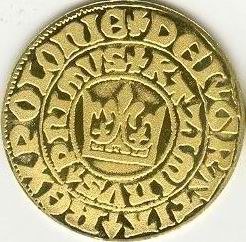
The Sejm of 1496 ended haggling over the Hungarian gold florin by fixing it everywhere at 'half a kopa' (mediae sexagenae), 30 groszy, on pain of a 30-florin fine. In 1505 it might not pass above 32 groszy. The 30-groszy złoty stayed as the unit of account, while the gold coin itself, the 'red złoty', kept rising in groszy in the Sejm's own tariffs: 14 (1451, in the salt trade), 30 (1496), 32 (1505), 58 (1598), 70 (1611), 4 złoty (1620), 12 złoty of copper-shilling money (1676), 18 złoty (1717). In 1766 the new złoty was still 30 copper groszy.
Private, under state licence or control
No one's debt
Florin · Ducat · Silver coin
Claims and evidence
The 1496 Sejm fixed the gold florin at half a kopa (30 groszy) across the kingdom; 1505 capped it at 32. Later tariffs in the Volumina price the same gold coin at 58 groszy (1598), 4 złoty (1620), 12 złoty in shilling money (1676) and 18 złoty (1717): a metal-to-metal measure of how far the grosz fell. Doubt: Legal caps, not market quotations; the 1451 figure is a salt-trade tariff for Hungary. Attested Little disputed
“statuimus et decernimus, ut in Regno nostro ubique valor floreni certus, videlicet mediae sexagenae habeatur, observeturque aeviterne”we enact and decree that throughout our kingdom the florin shall have a fixed value, namely half a sexagena [kopa], and that this be kept for ever (translation for the atlas)
Volumina Legum (St Petersburg: J. Ohryzko, 1859-60), reprint of the Piarist edition (Warsaw, 1732-82), vol. I, statutes of John Albert, 1496, 'De floreni valore', vol. I, p. 122 (fol. 266–267)“decernimus et statuimus, quod valor floreni Hungaricalis, triginta duos grossos non excedat, aliter emens et vendens puniatur”we decree and enact that the value of the Hungarian florin shall not exceed thirty-two groszy; whoever buys or sells otherwise shall be punished (translation for the atlas)
Volumina Legum (St Petersburg: J. Ohryzko, 1859-60), reprint of the Piarist edition (Warsaw, 1732-82), vol. I, statutes of Alexander, 1505, 'De valore floreni', vol. I, p. 139 (fol. 306)“floreni alio modo non debent recipi, nisi per septem scottos grossorum”florins are not to be taken otherwise than at seven scots of groszy (translation for the atlas)
Volumina Legum (St Petersburg: J. Ohryzko, 1859-60), reprint of the Piarist edition (Warsaw, 1732-82), vol. I, statutes of Casimir IV, 1451 (salt), vol. I, fol. 164“Za Iana Olbrachta szacowany był za groszy 30”Under John Albert it was valued at 30 groszy; under King Alexander it rose to 32; under King Sigismund III as far as 58 groszy (translation for the atlas)
Volumina Legum (St Petersburg: J. Ohryzko, 1859-60), reprint of the Piarist edition (Warsaw, 1732-82), vol. IX, Inwentarz praw, s.v. 'Moneta, Mennica', vol. IX, p. 298“Za Krola Alexandra postąpił do groszy 32”Under John Albert it was valued at 30 groszy; under King Alexander it rose to 32; under King Sigismund III as far as 58 groszy (translation for the atlas)
Volumina Legum (St Petersburg: J. Ohryzko, 1859-60), reprint of the Piarist edition (Warsaw, 1732-82), vol. IX, Inwentarz praw, s.v. 'Moneta, Mennica', vol. IX, p. 298“Za Krola zaś Zygmunta III aż do groszy 58”Under John Albert it was valued at 30 groszy; under King Alexander it rose to 32; under King Sigismund III as far as 58 groszy (translation for the atlas)
Volumina Legum (St Petersburg: J. Ohryzko, 1859-60), reprint of the Piarist edition (Warsaw, 1732-82), vol. IX, Inwentarz praw, s.v. 'Moneta, Mennica', vol. IX, p. 298“Potym czerw. złoty po zł. 12 monety szelężney, taler twardy po zł. 6, lewkowy po zł. 5”Then the red złoty at 12 złoty in shilling money, the hard thaler at 6 złoty, the lion thaler at 5 (translation for the atlas)
Volumina Legum (St Petersburg: J. Ohryzko, 1859-60), reprint of the Piarist edition (Warsaw, 1732-82), vol. IX, Inwentarz praw, s.v. 'Moneta, Mennica', vol. IX, p. 299 (const. 1676, 'O walorze monety')“cztery grosze srebrne na złoty, a groszy nowych miedzianych trzydzieści także na złoty rachować się ma”four silver groszy to the złoty, and thirty new copper groszy likewise to be reckoned to the złoty (translation for the atlas)
Volumina Legum (St Petersburg: J. Ohryzko, 1859-60), reprint of the Piarist edition (Warsaw, 1732-82), vol. VII, constitution of 1766, vol. VII, p. 199 (fol. 451)
Keep exploring
Same money
- Larins: silver wire money
- Poland, 1601: private mints in towns shut; coin only at Kraków and Olkusz
- Kipper und Wipper, 1618–23: good coin melted, small change debased
- Poland, 1620–27: coin prices capped, port towns charged with raising them on grain sellers
- Sweden, 1590–1593: debased marks refused, prices decreed, traders unwilling
Same region, same era
- Commonwealth, 1766: tymfs cut to 27 groszy as 'without intrinsic value'; a new złoty of silver
- Poland, 1527: Silesian Świdnica half-groszy banned, the road to Silesia closed
- Commonwealth, 1659–67: copper shillings and tymf złotys struck for army pay, then shut down
- Prussia, 1526: Copernicus on goldsmiths culling the good coin
- Moldavia, 1370s–1690s: debased groshes, Dabija's copper shillings and copies of foreign coin