An Atlas of Money · All entries
Sámi: coin taken by weight, silver buried, wealth in reindeer
Attested Little disputed
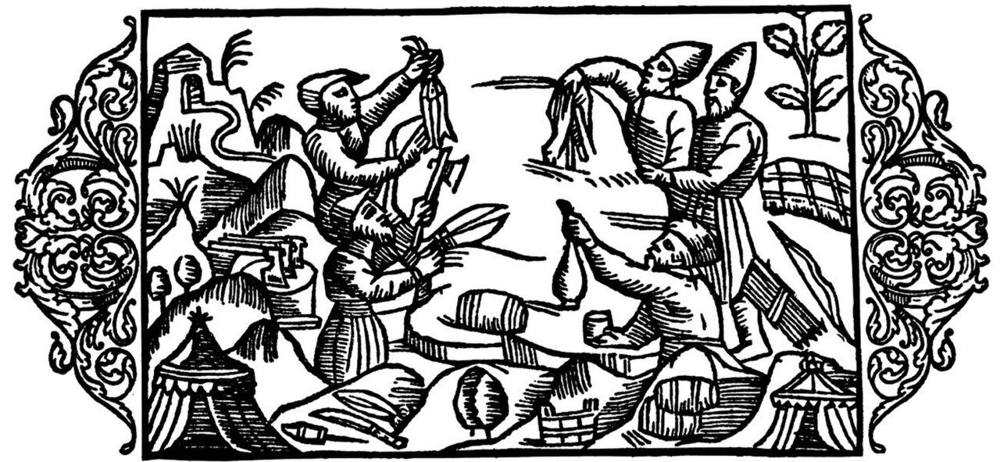
Open on the mapOlaus Magnus (1555): the Lapps traded goods without money and still lived without coin in the far north. Scheffer (1673/74): the only coins Lapps knew were the patacoon and half-patacoon, valued at 2 ounces of silver and taken by weight. They wanted no more money than their tribute required, and buried silver plate and coin in secret caches. Leem (1767): squirrel skins sold at forty for a thaler.
No state involved
No one's debt
Claims and evidence
Olaus Magnus says the Lapps traded goods without money, by good-faith exchange, minding the reckoning of goods rather than of coins, and that in the far north people still lived without coin. Supported Little disputed
“dum potius rerum, quam nummorum computa respiciens”since it looks to the reckoning of goods rather than of coins
Olaus Magnus, Historia de gentibus septentrionalibus (Rome 1555), lib. IV cap. 5 'De commutationibus rerum, & mercium sine nummis' (Runeberg transcription via archive.org mirror), Book IV, ch. 5, p. 136“commercia rerum absque pecunia, bonæ & fideli permutationi inhærentes”[they carry on] trade in goods without money, holding to good and faithful exchange
Olaus Magnus (1555), lib. IV cap. 5, Book IV, ch. 5, p. 137“licet in extremis partibus adhuc sine nummis in rerum commutatione vivunt”although in the furthest parts they still live by exchange of goods without coins
Olaus Magnus (1555), lib. VI cap. 12 'De Monetariis, & Monetis', Book VI, ch. 12, p. 212
Scheffer: the Lapps knew no money but the patacoon and half-patacoon, valued at two ounces of silver and passed by weight, as bullion; they sought no more money than their tribute required. Attested Little disputed
“In fine to this very day the Laplanders know no other mony but the”
Johannes Schefferus, The History of Lapland (Oxford 1674), ch. 'Of the Laplanders Fairs and Customs in Trading', Runeberg p. 0082, ch. XIV, p. 0082“but only by weight”
Schefferus (1674), same chapter, ch. XIV, p. 0082“fame custom remains among them, who are now concern'd for no more mony then what is Sufficient to pay their tribute”
Schefferus (1674), same chapter, ch. XIV, p. 0082
Scheffer: Lapp riches were moveables (cattle, silver, brass and copper vessels), esteemed above all in reindeer; silver plate or money was buried in a box in a copper kettle at a secret place (Roggri) unknown even to wife and children, and so often lost to heirs. Attested Little disputed
- Schefferus (1674), ch. on inheritance, Runeberg p. 0142, p. 0142
“ver plate or mony, and the place they call Roggri, they lay it first in a cloSe box, that in a copper kind of kettle”
Schefferus (1674), p. 0142, p. 0142“this they do So privatly, that neither their wives nor children can tell any thing of it”
Schefferus (1674), p. 0142, p. 0142
Leem (1767): in Finnmark the Sámi sold forty squirrel skins (a 'timber') for one thaler. Attested Little disputed
“by the Laplanders at the price of one thaler.”
Knud Leem, Beskrivelse over Finmarkens Lapper (Copenhagen 1767), Eng. tr. 'Account of Danish Lapland', in J. Pinkerton, General Collection of Voyages and Travels vol. 1 (London 1808), Leem, ch. on hunting (Pinkerton vol. 1; page number not checked)