An Atlas of Money · All entries
Spondylus shell rings in the Balkan Copper Age
Attested Strongly disputed
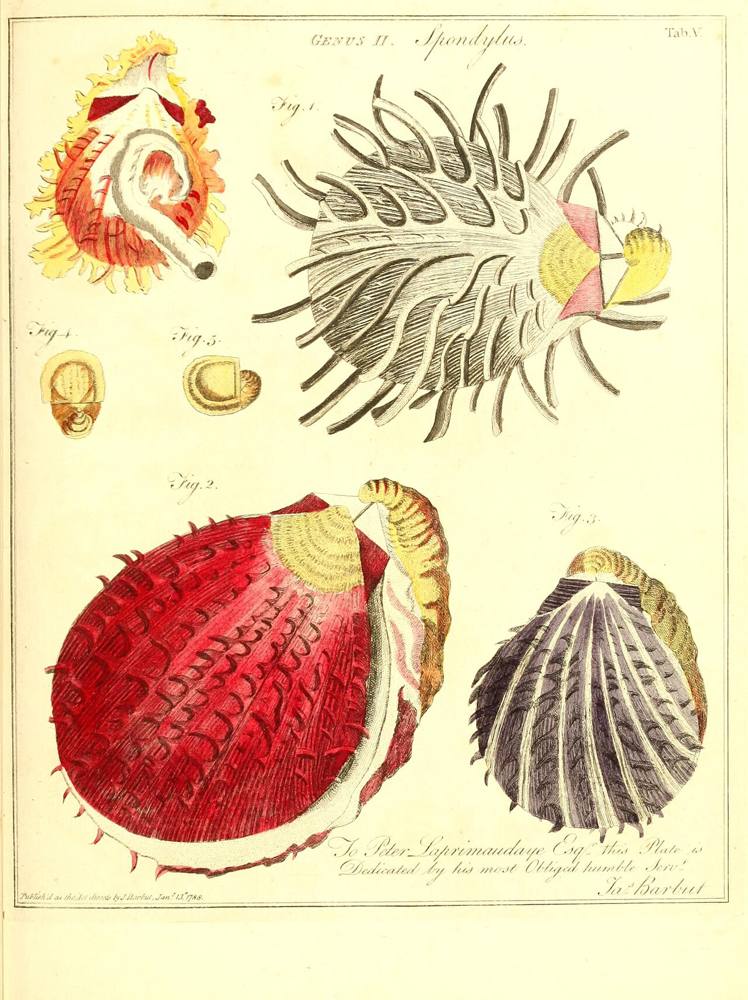
Open on the mapRings and beads of Spondylus, a spiny oyster from the Aegean and Adriatic, were traded far into the Balkans and buried in quantity at Varna and Durankulak. Two-thirds of the Varna rings were buried broken, and the missing pieces were kept among the living. They were repaired and handed on. But each ring was unique, valued for its markings, not made to a standard.
No state involved
No one's debt
Claims and evidence
The shells came from the Mediterranean, not the Black Sea. Attested Little disputed
“Both are currently local to the Mediterranean, especially the Aegean and the Adriatic”
Chapman, Gaydarska & Slavchev, 'The life histories of Spondylus shell rings from the Varna I Eneolithic cemetery', Acta Musei Varnaensis 6 (2008), 139–162“the analytical and ecological evidence does not support this view”
Chapman, Gaydarska & Slavchev, 'The life histories of Spondylus shell rings from the Varna I Eneolithic cemetery', Acta Musei Varnaensis 6 (2008), 139–162
Most Varna rings were buried broken, and the missing pieces stayed in circulation among the living. Attested Little disputed
“where fully two-thirds of all rings were deposited broken”
Chapman, Gaydarska & Slavchev, 'The life histories of Spondylus shell rings from the Varna I Eneolithic cemetery', Acta Musei Varnaensis 6 (2008), 139–162“only 75 complete rings are known out of a total of 219”
Chapman, Gaydarska & Slavchev, 'The life histories of Spondylus shell rings from the Varna I Eneolithic cemetery', Acta Musei Varnaensis 6 (2008), 139–162“the missing fragment(s) were either still in circulation in the domain of the living or else deposited elsewhere”
Chapman, Gaydarska & Slavchev, 'The life histories of Spondylus shell rings from the Varna I Eneolithic cemetery', Acta Musei Varnaensis 6 (2008), 139–162
Broken pieces were repaired and reused, keeping their value across generations. Attested Little disputed
“the recycling, repair and reuse of broken items was more extensive, which demonstrates that the Spondylus pieces kept their ancestral value”
Lazăr, Mărgărit & Radu, 'Between dominant ideologies and techno-economical constraints: Spondylus ornaments from the Balkans in the 5th millennium BC', BAR S2891 (2018)
Money reading: Todorova called the valves the earliest pan-European means of payment. The ring studies find no standard: each ring was valued for its diversity, and the authors doubt that exchange value explains it. Weak lead Strongly disputed
Contested by Todorova (2002), for a means of payment
“the emphasis is on diversity rather than on standardisation”
Chapman, Gaydarska & Slavchev, 'The life histories of Spondylus shell rings from the Varna I Eneolithic cemetery', Acta Musei Varnaensis 6 (2008), 139–162“is surely right to question factors of scarcity and exchange value as the”
Chapman, Gaydarska, Skafida & Souvatzi, in Ifantidis & Nikolaidou (eds), Spondylus in Prehistory, BAR S2216 (2011)“another taken as a token of the link between the newly-dead and the living, kept in the settlement or exchanged with another settlement”
Chapman, Gaydarska & Slavchev, 'The life histories of Spondylus shell rings from the Varna I Eneolithic cemetery', Acta Musei Varnaensis 6 (2008), 139–162