An Atlas of Money · All entries
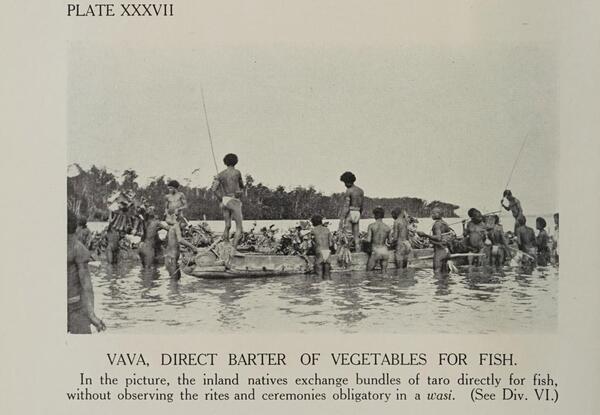
Trobriands: gimwali, barter pure and simple
Attested Little disputed
Open on the mapMalinowski describes “bartering, pure and simple” between the craft villages of the interior and the farming districts of Kiriwina, which the islanders kept sharply apart from gifts and from the Kula.
No state involved
No one's debt
Claims and evidence
Malinowski describes “bartering, pure and simple” between the craft villages of the interior and the farming districts of Kiriwina, which the islanders kept sharply apart from gifts and from the Kula. Attested Little disputed
“This bartering, pure and simple, takes place mainly between the industrial communities of the interior, which manufacture on a large scale the wooden dishes, combs, lime pots, armlets and baskets and the agricultural districts of Kiriwina,”
Malinowski, B., Argonauts of the Western Pacific (1922), ch. VI
Inside the group: Malinowski records harvest gifts (urigubu) that fill a man's yam house from his wife's brothers, repaid only in part by occasional valuables or pigs; tribute to the chief (pokala); reciprocal gifts between households; and the purchase of a small pig with food or minor valuables, which the islanders call gimwali. Attested Little disputed
“in order to fill the yam house of a man who could do it quite well for himself, if it were not that he is under obligation to give all the harvest to his sister's husband!”
Malinowski, B., Argonauts of the Western Pacific (1922), ch. VI, div. V, ch. VI, div. V (urigubu harvest gifts)“The reciprocity in these gifts never amounts to their full value, but the recipient is supposed to give a valuable (vaygu'a) or a pig to his wife's brother from time to time.”
Malinowski, B., Argonauts of the Western Pacific (1922), ch. VI, list of gifts, class 2, ch. VI, div. VI, class 2 (urigubu)“The chief's tributes which we have put in this category are called pokala.”
Malinowski, B., Argonauts of the Western Pacific (1922), ch. VI, list of gifts, class 2, ch. VI, div. VI, class 2 (pokala tribute to the chief, repaid by smaller counter-gifts)“the material one is given to a neighbouring household. These gifts are always reciprocal.”
Malinowski, B., Argonauts of the Western Pacific (1922), ch. VI, list of gifts, class 4, ch. VI, div. VI, class 4 (milamala gifts between households)“when a small pig is purchased by food or minor objects of value, they call this barter (gimwali)”
Malinowski, B., Argonauts of the Western Pacific (1922), ch. VI, list of gifts, class 5, ch. VI, div. VI, class 5