An Atlas of Money · All entries
England, 1206–1408: the King's Exchange — only the king's exchangers may change coin or buy bullion
Attested Little disputed
Open on the mapThe statute of the Hilary parliament of 1351/2 (25 Edw. III st. 5 c. 12) lets anyone exchange gold for silver, but no one may take profit for making such exchange, on pain of forfeiting the money exchanged, 'except the King's Exchangers'.
Imposed by the state
No one's debt
Silver penny · Silver by weight · Gold coin
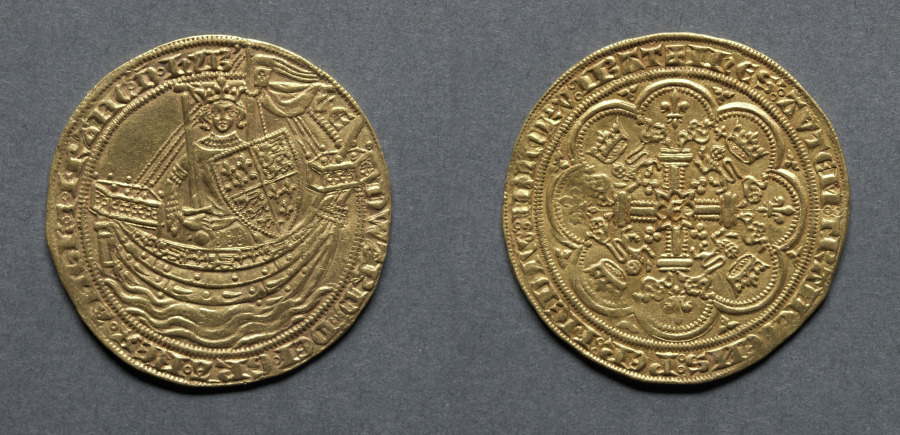
Claims and evidence
The statute of the Hilary parliament of 1351/2 (25 Edw. III st. 5 c. 12) lets anyone exchange gold for silver, but no one may take profit for making such exchange, on pain of forfeiting the money exchanged, 'except the King's Exchangers'. Ruding's annals, from the rolls, trace the rule back: a 1206 ordinance allowing exchange only at the king's exchange; Henry III's 1222 proclamation that no one should exchange except at the exchanges of London and Canterbury, which he then let to a farmer for rent; a 1314 London proclamation that goldsmiths might not buy silver plate or bullion but must bring it to the king's exchange in the Tower; and in 1355 a proclamation making unlicensed exchange a capital offence. Doubt: Only the 1351/2 statute was read in a primary text. The dates before it, including 1222, are relayed through Ruding's summaries of the Close and Patent Rolls, and Ruding's 1222 paragraph is badly printed in the copy read. Ruding notes repeated orders against unlicensed exchangers (1352, 1355), so the rule was often broken. Attested Little disputed
“nor take no Profit for making such Exchange, upon Pain of Forfeiture of the”
The Statutes of the Realm, vol. 1 (London: Record Commission, 1810), 25 Edw. III stat. 5 c. 12 (Westminster, Hilary parliament 1351/2), 25 Edw. III st. 5 c. 12, English translation“so exchanged ; except the King’s Exchangers”
The Statutes of the Realm, vol. 1 (London: Record Commission, 1810), 25 Edw. III stat. 5 c. 12 (Westminster, Hilary parliament 1351/2), 25 Edw. III st. 5 c. 12, English translation“the exclusive privilege of purchasing the precious metals was claimed by our monarchs, who appointed proper officers, to whom they delegated that branch of their prerogative.”
Rogers Ruding, Annals of the Coinage of Great Britain, 3rd ed., vol. 2 (London, 1840), 'Exchanges', pp. 138-140, p. 138“one of the articles expressly prohibited all persons from making exchange of gold or silver, except at the king's exchange.”
Rogers Ruding, Annals of the Coinage of Great Britain, 3rd ed., vol. 2 (London, 1840), 'Exchanges', pp. 138-140, p. 138, citing Cambium Regis (1628)“no one, either goldsmith or other, should buy any silver plate, or silver in bullion; but that those who had such to sell should come to the king's cambium in his Tower of London”
Rogers Ruding, Annals of the Coinage of Great Britain, 3rd ed., vol. 2 (London, 1840), 'Exchanges', pp. 138-140, p. 140“a proclamation was issued declaring such exchange to be a capital offence, and punishable by loss of life and limb”
Rogers Ruding, Annals of the Coinage of Great Britain, 3rd ed., vol. 2 (London, 1840), 'Exchanges', pp. 138-140, p. 140, citing Claus. 29 Edw. III m. 13 dors.
Keep exploring
Same money
- Ilkhanate under Ghazan, 1295–1304: one die, unalloyed coin, and a ban on interest
- Edward I bans pollards and crockards
- Yunnan: cowries tied to silver
- Hungary, 1325–1338: a gold forint on the Florentine standard, while trade kept to Bohemian groats
- Goryeo cloth and bottle silver
Same region, same era
- Italian bankers to the papal camera
- Papal annates, first levied in 1306
- Papal taxes in England taken by weight
- Peter's pence: England's yearly payment to Rome
- Exchequer tally sticks