An Atlas of Money · All entries
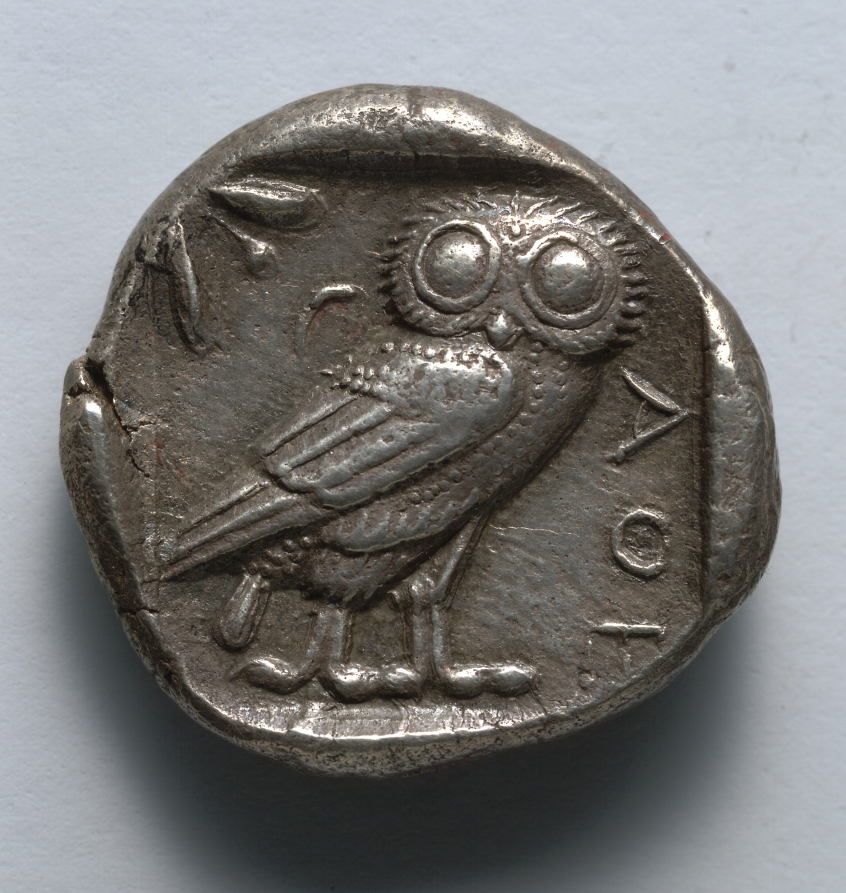
Athenian Empire, c. 425–414 BC: the allies ordered to use Athenian coin, weights and measures
Attested Disputed
Open on the mapAn Athenian decree, copied on stone in the allied cities, bound the Council's oath against anyone who struck silver in the cities or used foreign coin, weights or measures instead of the Athenians'. Officials who did not comply were to lose their civic rights and property. Copies survive from Smyrna, Olbia, Cos, Siphnos, Aphytis, Hamaxitos and Syme. Its date is uncertain, and the coins show no clear moment when allied minting stopped, though 34 of 79 allied mints had closed by 420.
Imposed by the state
No one's debt
Greek coin · Silver coin
Claims and evidence
An Athenian decree bound the Council's oath against anyone who struck silver in the allied cities or used foreign coin, weights or measures. Non-compliant officials lost civic rights and property. A copy was to stand in each city's agora. Doubt: The date is uncertain (mid-420s to c. 414 BC; AIO dates it 'ca. 414 BC?'), and the text is put together from fragmentary copies whose wording differs. End date -404 marks the empire's fall and is the atlas's own bound, not the decree's. Attested Disputed
Contested by Kroll (2009), relayed by AIO: no clear numismatic trace; date disputed (mid-420s or c. 414 BC).
“if anyone strikes silver coinage in the cities and does not use the coins of the Athenians or their weights or measures, but foreign coins and weights and measures”
'Decree enforcing use of Athenian coins, weights and measures' (IG I3 1453; ML 45; OR 155), c. 425-414 BC, trans. S. D. Lambert and R. Osborne, Attic Inscriptions Online, clause 10 (composite text)“let him lose his civic rights and let his property be confiscated and a tithe given to the goddess”
'Decree enforcing use of Athenian coins, weights and measures' (IG I3 1453; ML 45; OR 155), c. 425-414 BC, trans. S. D. Lambert and R. Osborne, Attic Inscriptions Online, clause 3“they are to place it on a stone stele in the agora at the expense of each city”
'Decree enforcing use of Athenian coins, weights and measures' (IG I3 1453; ML 45; OR 155), c. 425-414 BC, trans. S. D. Lambert and R. Osborne, Attic Inscriptions Online, clause 8“The measure has left no clear trace in the numismatic record.”
S. D. Lambert and R. Osborne, commentary to OR 155, Attic Inscriptions Online (citing J. H. Kroll 2009), note 2“with 34 of 79 cities that minted after 478 ceasing to do so by 420”
S. D. Lambert and R. Osborne, commentary to OR 155, Attic Inscriptions Online (citing J. H. Kroll 2009), note 2
Keep exploring
Same money
- Silver coins of the Phoenician cities, c. 450–333 BC
- Thasian or Thracian? The silenus-and-nymph silver
- Tomis: cast monetary signs and gold staters
- Carthage begins to coin
- Istros: arrowhead money, gold staters and late coin finds
Same region, same era
- Spartan iron money
- Cattle as unit of value: Homer and early Rome
- Early Rome: bronze weighed on the scales
- Arrowhead and dolphin money at Olbia
- Honest weights in the Torah