Money in Turkey
Türkiye'de para
Entries placed by today's borders.
Entries 23, in 4 eras
Span 2900 BC – 2026
Kinds of money Silver coin 5, Solidus 4, Base-metal coin 3, State notes 3, Silver by weight 2, and 10 others
W ithin present-day Turkey, the atlas places 23 entries, by their main place or a dated one, from 2900 BC to 2026. The oldest is Balance weights and ingots at Troy (2900 BC–2000 BC); the most recent, Turkey, 2018: property sales and rents must be in lira (2018–2026). The money named most often is Silver coin, in 5 entries.
The word for money
- Turkish para: Persian pāra 'piece'. Nişanyan, S., Nişanyan Sözlük: Çağdaş Türkçenin Etimolojisi (online), s.v. para, s.v. para More on the word for money →
Antiquity 3000 BC – AD 499
13 entries, 2900 BC – AD 473
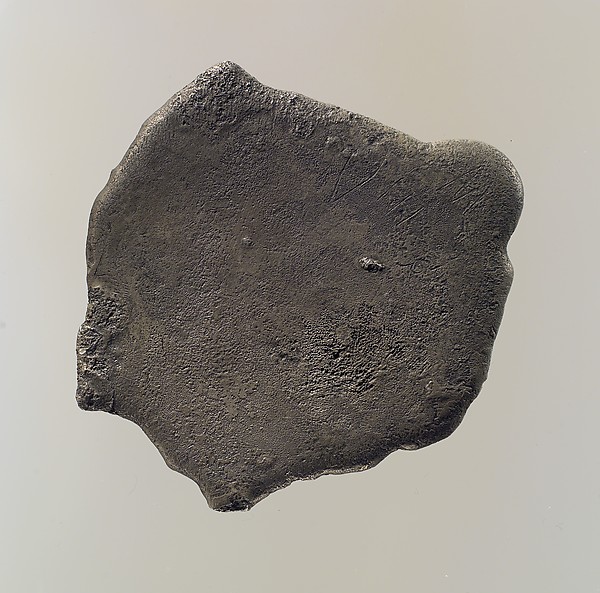


10 SICLES D'ARGENT il donne, ses obligations il remplit.he gives 10 shekels of silver and so fulfils his obligationB. Hrozný, Code hittite provenant de l'Asie Mineure (Paris: Geuthner, 1922), § 8, § 8, same injury to a slave
Hollow marks: entries elsewhere that share this era's money (Greek coin) or that its sources name.
List of entries (13, and 8 elsewhere)
- 1 Balance weights and ingots at Troy 2900 BC–2000 BC
- 2 Kanesh: weighed silver in Old Assyrian trade 1925 BC–1710 BC
- 3 Hittite laws: fines and prices in silver 1650 BC–1200 BC
- 4 Oxhide copper ingots (Uluburun ship) 1600 BC–1000 BC
- 5 Cattle as unit of value: Homer and early Rome 750 BC–300 BC
- 6 Lydian electrum and the Croeseid 630 BC–546 BC
- 7 Athenian Empire, c. 425–414 BC: the allies ordered to use Athenian coin, weights and measures (today in Turkey) 425 BC–404 BC
- 8 Clazomenae: iron coins for the citizens' silver 400 BC–330 BC
- 9 Deposits at the temple of Artemis, Ephesus 394 BC – AD 100
- 10 Lysimachos and the posthumous west-Pontic staters 306 BC–72 BC
- 11 Diocletian's Price Edict, 301: maximum prices and wages on pain of death AD 301
- 12 Late Roman mints: mint workers bound to their trade, 317–425 AD 317–AD 425
- 13 Eastern Roman gold to the Huns and Goths AD 435–AD 473
Elsewhere
- a Athenian Empire, c. 425–414 BC: the allies ordered to use Athenian coin, weights and measures Aphytis (copy), 425 BC
- b Athenian Empire, c. 425–414 BC: the allies ordered to use Athenian coin, weights and measures Siphnos (copy), 425 BC
- c Athenian Empire, c. 425–414 BC: the allies ordered to use Athenian coin, weights and measures Cos (copy), 425 BC
- d Athenian Empire, c. 425–414 BC: the allies ordered to use Athenian coin, weights and measures Olbia (copy), 425 BC
- e Paeonian royal silver Paeonia, 400 BC
- f Athenian horoi: land pledged for debt Athens, 400 BC
- g Lysimachos and the posthumous west-Pontic staters Mesambria 250 BC
- h Lysimachos and the posthumous west-Pontic staters Istros c.215 BC
Middle period 500–1499
5 entries, 963–1687

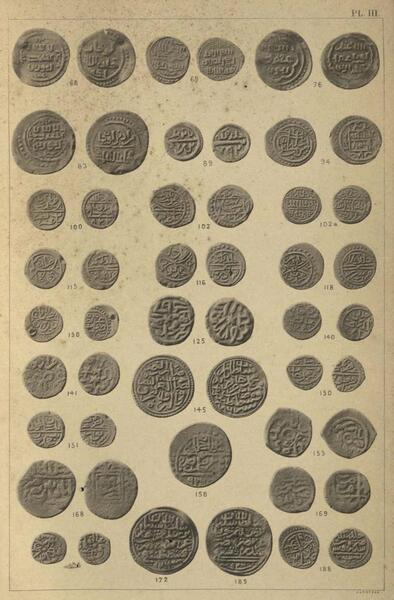
He also reduced the nomisma by devising the so-called tetarteron, Nomismata being henceforth of two kinds, he demanded the heavier in the collection of taxes, while expenses were disbursed in the latter.John Scylitzes, Synopsis historiarum (Nicephorus II), as printed and translated in P. Grierson, Catalogue of the Byzantine Coins in the Dumbarton Oaks Collection, vol. 3.1 (1973), pp. 35-36 (tr. G. Kustas)
Hollow marks: entries elsewhere that share this era's money (Dinar, Hyperpyron).
List of entries (5, and 5 elsewhere)
- 1 Nicephorus II’s light nomisma (tetarteron), 963–969 963–969
- 2 Michael IV, 1034–1041: a former money-changer on the throne as the gold is debased 1034–1041
- 3 The Byzantine hyperpyron: from 20½ to 11 carats 1092–1354
- 4 Coinage of Cilician Armenia 1198–1375
- 5 The Ottoman akçe and its loss of weight 1328–1687
Elsewhere
- a Dubrovnik, 1337-1394: the commune's coin, where even a good copy was a crime Dubrovnik, 1337
- b Ivan Alexander's charter to Venice, 1352: dues in perperi Varna, 1352
- c Byzantine gold hyperpyra in 14th-century Bulgaria Plovdiv, 1300
- d Serbia, c. 1300-1354: the king's silver dinar, Dante's charge of copying Venice, and Dušan's law on coining Serbian kingdom, 1300
- e Cairo, 1379–1414: copper fulus displace the dirham Cairo, 1379
Early modern 1500–1899
4 entries, 1584–1877


le beschlik dont la valeur légale dépassait de 50 p. 100 la valeur intrinsèqueMorawitz, Les finances de la Turquie (Paris, 1902), p. 18 (coinage c. 1849)
List of entries (4)
Modern 1900 to today
1 entry, 2018–2026


Düzenleme yayımı tarihinde (13.09.2018) yürürlüğe girmiştir. Buna göre, 30 gün içinde, belirtilen nitelikte olan ve daha önce yapılmış olan yürürlükteki sözleşmelerdeki döviz cinsinden kararlaştırılmış bulunan bedellerin TL’ye çevrilmesi gerekmektedir.The rule came into force on its publication date (13.09.2018). Accordingly, within 30 days, prices agreed in foreign currency in existing contracts of the kind described, made earlier, must be converted to TL. (translation for the atlas)Grant Thornton Türkiye, Vergi Sirküleri 2018/53 (14 September 2018), p. 1
List of entries (1)
What this cannot show
- How much money of each kind was in use: the marks count entries, not coins, notes or goods.
- A census: the atlas seeks out money made without a state, so an era with few entries is not an era with little money.
- The past's borders: entries are placed by today's, and the same money often ran beyond them; see the map.
Sources quoted on this page
- B. Hrozný, Code hittite provenant de l'Asie Mineure (Paris: Geuthner, 1922), § 8
- John Scylitzes, Synopsis historiarum (Nicephorus II), as printed and translated in P. Grierson, Catalogue of the Byzantine Coins in the Dumbarton Oaks Collection, vol. 3.1 (1973)
- Morawitz, Les finances de la Turquie (Paris, 1902)
- Grant Thornton Türkiye, Vergi Sirküleri 2018/53 (14 September 2018)