An Atlas of Money · All entries
Constantinople, 1584–1589: the akçe debased and the janissaries demand the officials’ heads
Supported Little disputed
Shaded: Ottoman Empire, rough extent c. 1600, after Shepherd, Historical Atlas, 1923, 'The Ottoman Empire, 1481–1683' (public domain). It shows the state’s lands, not how far this money went.
Open on the map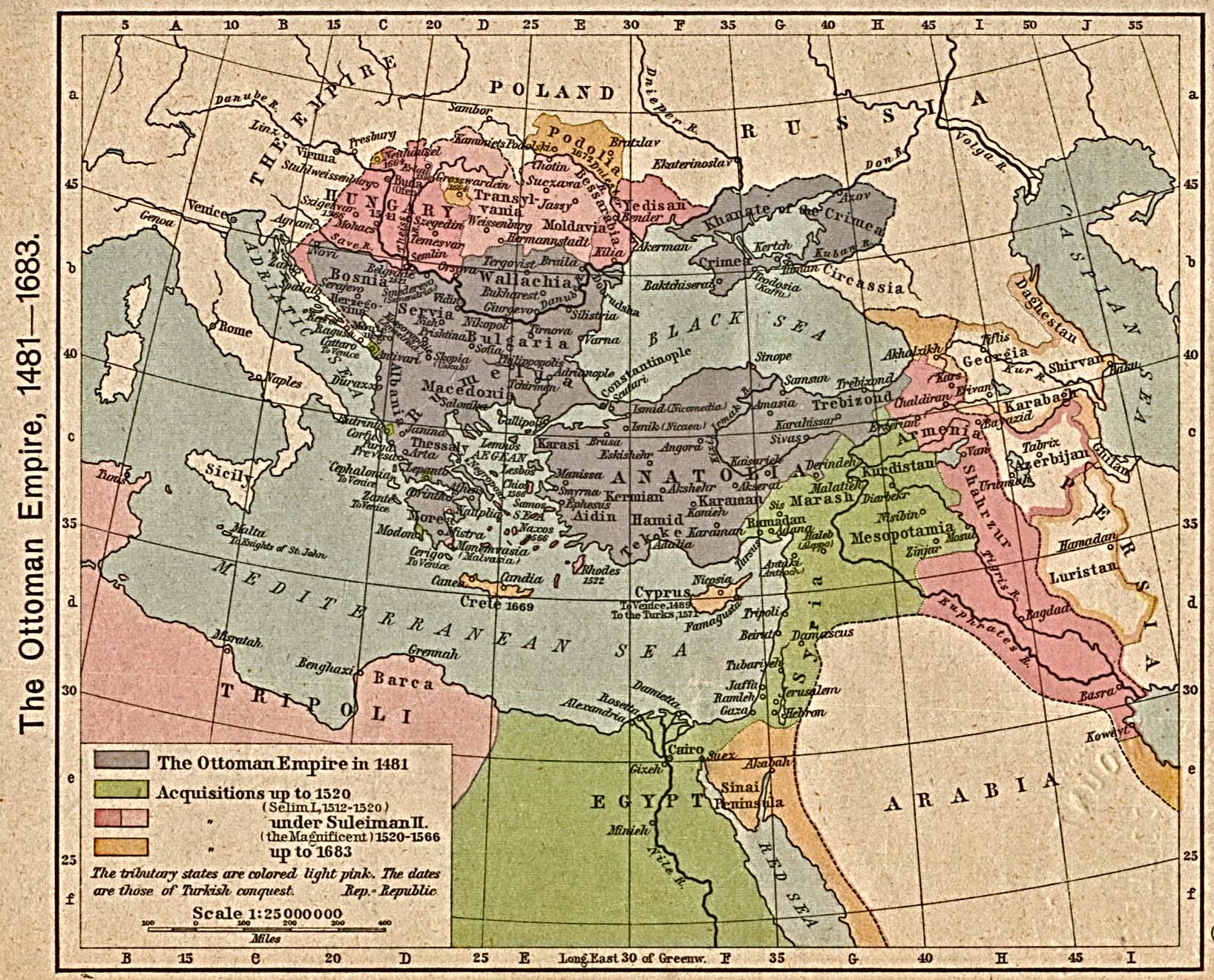
Hammer, relaying the chroniclers Selânikî and Âli, says debasement began in AH 992 (1584): the okka of silver, to be struck into 500 akçe by the prescribed standard, was struck into 1,000 and more.
Imposed by the state
No one's debt
Silver coin
Claims and evidence
Hammer, relaying the chroniclers Selânikî and Âli, says debasement began in AH 992 (1584): the okka of silver, to be struck into 500 akçe by the prescribed standard, was struck into 1,000 and more. He says the mint was in the hands of Jews; six years later the superintendent of the mint offered the defterdar Mahmud 200,000 akçe to accept a still worse coin for the troops’ pay. Mahmud refused; the mint superintendent went to the Beylerbey of Rumeli, Mehmed Pasha, who took the sum and ordered the defterdar to pay the troops in the copper-red coin. In 1589 the janissaries broke into the Divan in the palace and demanded both men’s heads; Sultan Murad III gave them up and both were executed. The garrison at Tabriz also refused badly struck coin from Constantinople as pay. Doubt: Hammer is a relayed account; Selânikî and Âli were not read. Supported Little disputed
“ohne die Verſchlimmerung der Münze, mel: che mit dem Jahre neunhundert zwey und neunzig (taufend fünfhun: dert vier und achtzig) begann”without the debasement of the coin, which began in the year 992 (1584). (translation for the atlas)
J. von Hammer, Geschichte des Osmanischen Reiches, 2nd ed., vol. 2 (1834), pp. 566-568, after the chroniclers Selânikî and Âli, p. 566“Okka Silbers, weldes dem vorgefchriebenen Münzfuße gemäß zu fünf: hundert Aöpern ausgeprägt werden folte, zu taufend und mehr aus» gemünzt ward”the okka of silver, which by the prescribed standard was to be struck into five hundred aspers, was struck into a thousand and more. (translation for the atlas)
J. von Hammer, Geschichte des Osmanischen Reiches, 2nd ed., vol. 2 (1834), pp. 566-568, after the chroniclers Selânikî and Âli, p. 566“Die Münze war in den Händen vos Zuden”The mint was in the hands of Jews. (translation for the atlas)
J. von Hammer, Geschichte des Osmanischen Reiches, 2nd ed., vol. 2 (1834), pp. 566-568, after the chroniclers Selânikî and Âli, p. 567“brachte der Aufieher der Münze noch ſchlimmeres Sildergeld,;”the superintendent of the mint brought still worse silver coin. (translation for the atlas)
J. von Hammer, Geschichte des Osmanischen Reiches, 2nd ed., vol. 2 (1834), pp. 566-568, after the chroniclers Selânikî and Âli, p. 567“both. dem Defterdar Mahmud zweymahlhuns derttaufend Aspern an, um die Annahme desſelben zur Truppenzads lung zu erhalten. Der Defterdar wies die Beftehungiund den Antrag zurüd,”offered the defterdar Mahmud two hundred thousand aspers to have it accepted for paying the troops. The defterdar rejected the bribe and the proposal. (translation for the atlas)
J. von Hammer, Geschichte des Osmanischen Reiches, 2nd ed., vol. 2 (1834), pp. 566-568, after the chroniclers Selânikî and Âli, p. 567“die gebotyene Summe annehmend, befapl dem Defterdar, ohne weiteres die Truppen mit den Eupferrothen Silbergelde zu bezahlen”accepting the sum offered, ordered the defterdar to pay the troops without more ado in the copper-red silver coin. (translation for the atlas)
J. von Hammer, Geschichte des Osmanischen Reiches, 2nd ed., vol. 2 (1834), pp. 566-568, after the chroniclers Selânikî and Âli, p. 567“und mit der Forderung der Köpfe des Beglerbegd - Günftlings und des Defterdard, an,”and attacked [the viziers in the Divan] demanding the heads of the Beylerbey and of the defterdar. (translation for the atlas)
J. von Hammer, Geschichte des Osmanischen Reiches, 2nd ed., vol. 2 (1834), pp. 566-568, after the chroniclers Selânikî and Âli, p. 567“Der Anlaß war zu Gonftantinopel fchlecht ausgeprägtes Geld, das fie als Sold ahzunehmen fich weis gerten.”The cause was badly struck money from Constantinople, which they refused to accept as pay. (translation for the atlas)
J. von Hammer, Geschichte des Osmanischen Reiches, 2nd ed., vol. 2 (1834), pp. 566-568, after the chroniclers Selânikî and Âli, p. 569
Keep exploring
Same money
- Castile, 1599–1609: pure copper vellón, and Mariana's protest
- Poland, 1496–1766: the gold złoty fixed at 30 groszy, then priced ever higher in groszy
- Larins: silver wire money
- Moldavia, 1370s–1690s: debased groshes, Dabija's copper shillings and copies of foreign coin
- The Ottoman akçe and its loss of weight
Same region, same era
- Marturina: marten-skin tax money
- Banco della Piazza di Rialto, Venice
- The Venetian gold ducat of 1284