An Atlas of Money · All entries
The Rus on the Volga, 922: furs and captives sold for dirhams
Attested Little disputed
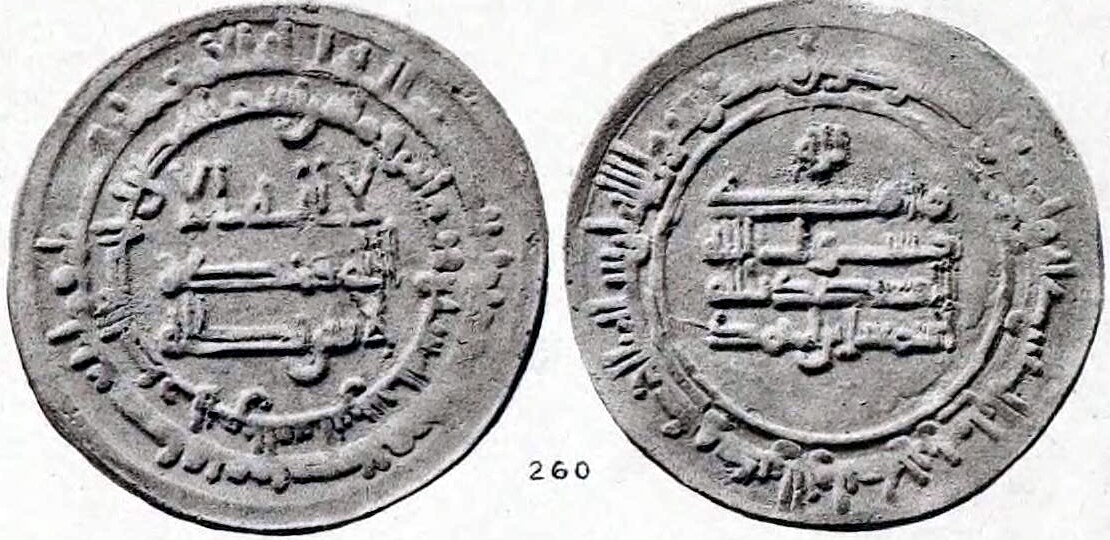
Open on the mapIbn Fadlan saw Rus merchants camped on the Volga in 922. Their women wore neck rings of gold and silver, one for every ten thousand dirhams the husband owned, so that a woman's rings showed her husband's silver. The Rus paid a dirham for a glass bead. A merchant told his idol how many slave girls and how many sable skins he had brought and prayed for a buyer with dinars and dirhams. Ibn Rusta (c. 903–13) says the Rus took Slav captives by ship and sold them at Khazaran and Bulkar, and that they traded only in sable, squirrel and other furs, taking coined silver for them, which they tied into their belts. Furs and captives were the goods sold; dirhams were the money they were sold for and in which wealth was kept and shown.
No state role recorded
No one's debt
Claims and evidence
Ibn Fadlan, as Yaqut quotes him, writes that the Rus women wore neck rings of gold and silver: when a man owned ten thousand dirhams he had a neck ring made for his wife, two for twenty thousand, and one more for every ten thousand he gained. Attested Little disputed
“وفى اعناقهن اطواق ذهب وفضة لان الرجل اذا ملك عشرة الاف درهم صاغ لامراته طوقا وان ملك عشرين الفا صاغ لها طوقين وكذلك كل عشرة الاف درهم كلما ازداد يزداد طوق امراته”On their necks are rings of gold and silver, for when a man owns ten thousand dirhams he has a neck ring fashioned for his wife; if he owns twenty thousand he has two neck rings fashioned for her; and so for every ten thousand dirhams he gains, his wife gains a neck ring. Own translation from the Arabic of the edition.
Ibn Fadlan via Yaqut s.v. Rus, Arabic text as printed by C. M. Frähn, Ibn-Foszlan's und anderer Araber Berichte über die Russen älterer Zeit (St. Petersburg, 1823), Arabic text, p. 4“Wenn der Mann nämlich zehn tausend Dirhem (Silberstücke) besitzt, läfst er seiner Frau eine Kette machen; hat er zwanzig tausend, bekömmt sie zwei Halsketten”For when a man owns ten thousand dirhams (pieces of silver), he has a chain made for his wife; if he has twenty thousand, she gets two neck chains. Own translation from Frähn's German.
C. M. Frähn, Ibn-Foszlan's und anderer Araber Berichte über die Russen älterer Zeit (St. Petersburg, 1823), p. 5
The Rus paid a dirham for a glass bead and strung the beads as necklaces for their women. Attested Little disputed
“ويشترون الخرزة منه بدرهم وينظمون عقد النسا بهم”They buy a bead of it for a dirham and string them as necklaces for their women. Own translation from the Arabic of the edition.
Ibn Fadlan via Yaqut s.v. Rus, Arabic text as printed by C. M. Frähn, Ibn-Foszlan's und anderer Araber Berichte über die Russen älterer Zeit (St. Petersburg, 1823), Arabic text, p. 4“zahlen einen Dirhem für so eine Glasperle und reihen sie für ihre Weiber zum Halsbande.”they pay a dirham for such a glass bead and string them for their women as necklaces. Own translation from Frähn's German.
Ibn Fadlan via Yaqut s.v. Rus, Arabic text as printed by C. M. Frähn, Ibn-Foszlan's und anderer Araber Berichte über die Russen älterer Zeit (St. Petersburg, 1823), Arabic text, p. 4
Before trading, a merchant told his idol that he had brought so many slave girls and so many sable skins, and asked for a merchant with dinars and dirhams who would buy whatever he wished. Attested Little disputed
“ومعى من الجوارى كذا وكذا راسا ومن السمور كذا وكذا جلدا”With me are so many head of slave girls and so many skins of sable. Own translation from the Arabic of the edition.
Ibn Fadlan via Yaqut s.v. Rus, Arabic text as printed by C. M. Frähn, Ibn-Foszlan's und anderer Araber Berichte über die Russen älterer Zeit (St. Petersburg, 1823), Arabic text, p. 8“اريد ان ترزقنى تاجرا معه دنانير ودراهم فيشترى منى كلما اريد ولا يخالفنى فى جميع ما اقول”I want you to grant me a merchant who has dinars and dirhams, who will buy from me whatever I wish and not oppose me in anything I say. Own translation from the Arabic of the edition.
Ibn Fadlan via Yaqut s.v. Rus, Arabic text as printed by C. M. Frähn, Ibn-Foszlan's und anderer Araber Berichte über die Russen älterer Zeit (St. Petersburg, 1823), Arabic text, p. 8
Ibn Rusta writes that the Rus raided the Slavs by ship, took them captive and sold them at Khazaran and Bulkar; and that they had no estates, villages or fields, their only occupation being the trade in sable, squirrel and other furs, which they sold for coined money that they tied into their belts. Supported Little disputed
“وهم يغزون الصقالبة يركبون السفن حتى يخرجوا اليهم ويسبوهم ويخرجوهم الى خزران وبلكار يبيعونهم منهم”They raid the Saqaliba, going in ships until they come out to them, and take them captive, and carry them out to Khazaran and Bulkar and sell them to them. Own translation from the Arabic of the edition.
Ibn Rusta, Kitab al-a'laq al-nafisa, ed. M. J. de Goeje, Bibliotheca Geographorum Arabicorum VII (Leiden, 1892), p. 145, line 15“وليس لهم عقار ولا قرى ولا مزارع انما حرفتهم التجارة فى السمور والسنجاب وغير ذلك من الوبر فيبيعونه من مبتاعيهم ويأخذون بالاثمان الصامت من المال فيشدونه فى احقابهم”They have no estates, villages or fields; their only occupation is trade in sable, squirrel and other furs, which they sell to their buyers, taking as the price coined money ['silent wealth'], which they tie into their belts. Own translation from the Arabic of the edition.
Ibn Rusta, Kitab al-a'laq al-nafisa, ed. M. J. de Goeje, Bibliotheca Geographorum Arabicorum VII (Leiden, 1892), p. 145, lines 19-21
Frähn wrote in 1823, from finds in Russia, that whole dirhams were cut or broken into halves and quarters, for small change or to make up the weight when silver was weighed on the scales. Supported Little disputed
“und, um Scheidemünze zu haben, oder um, Falls das Silber mit der Waage zugewogen wurde, das Fehlende des Gewichts zu ergänzen, wusste man sich zu helfen, indem man die Silbermünzen, die alle nur ganze Dirhems waren, in halbe und viertel zerhieb oder zerbrach, dergleichen Stücke sich sehr häufig neben den ganzen finden”and to have small change, or, where the silver was weighed out on the scales, to make up what the weight lacked, people helped themselves by cutting or breaking the silver coins, which were all whole dirhams, into halves and quarters; such pieces are found very often beside the whole ones. Own translation from Frähn's German.
C. M. Frähn, Ibn-Foszlan's und anderer Araber Berichte über die Russen älterer Zeit (St. Petersburg, 1823), p. 82