Money in Côte d'Ivoire
La monnaie en Côte d'Ivoire
Entries placed by today's borders.
Entries 6, in 2 eras
Span 1500–1915
Kinds of money Gold dust 3, Cowrie shells 2, Silver coin 1, Pound sterling 1, Iron bars and ingots 1
W ithin present-day Côte d'Ivoire, the atlas places 6 entries, by their main place or a dated one, from 1500 to 1915. The oldest is Cowrie currency in West Africa (1500–1900); the most recent, Baule country: French head tax, 1905–1915 (1905–1915). The money named most often is Gold dust, in 3 entries.
The word for money
- French argent: silver (the white metal). Trésor de la langue française informatisé (ATILF/CNRTL), Étymologie, s.v. argent, Étymol. 1 (881-82) More on the word for money →
Early modern 1500–1899
2 entries, 1500–1900

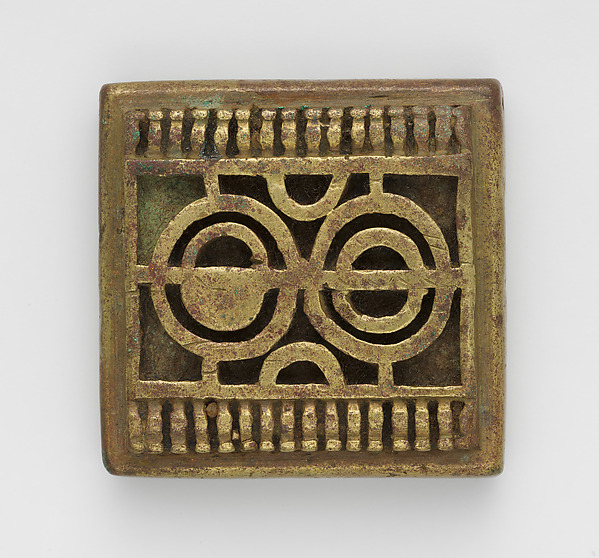
The Boyal Niger Company, for simplicity and uniformity in trading transactions calculate, in Africa, altogether in cowries, for which they have a fixed rate, viz., one shiUing and threepence per " head " (20CX) cowries)Mockler-Ferryman, A. F., Up the Niger (London, 1892), Appendix: Account of Expenses of Visit to Ilorin, Appendix (A), p. 306
Hollow marks: entries elsewhere that share this era's money (Cowrie shells) or that its sources name; the 2 farthest are listed below, not drawn.
List of entries (2, and 8 elsewhere)
- 1 Cowrie currency in West Africa (today in Côte d'Ivoire) 1500–1900
- 2 Bondoukou: gold dust by weight, cowries for small change 1888–1889
Elsewhere
- a Cowrie currency in West Africa Kano 1851
- b Cowrie currency in West Africa Ilorin 1889
- c Buganda: cowrie prices and clan help with debts Buganda, 1886
- d IBEA Company caravans, 1890–92: food bought with beads, wire and cloth Caravan road from Mombasa by Machakos to Kampala, 1890
- e Timbuktu: unstamped gold and cowries Tombuto, 1510
- f Kukawa, 1871: credit through cowries to avoid interest Kukawa, 1871
- Bengal, c. 1512–15: cowries against the silver tanka Kingdom of Bengal, 1512
- Luang Prabang, 1867: cowrie strings in the market, cut silver to the north Luang Prabang, 1867
Modern 1900 to today
4 entries, 1902–1915


Cet impôt est passé de 100.000 francs en 1905 à 350.000 francs en 1907.This tax rose from 100,000 francs in 1905 to 350,000 francs in 1907.G. Angoulvant, La pacification de la Côte d'Ivoire, 1908-1915 (Paris, 1916), pp. 186-187
Hollow marks: entries elsewhere that share this era's money (Iron bars and ingots).
List of entries (4, and 1 elsewhere)
- 1 Baule country: gold dust weighed twice 1902
- 2 Côte d'Ivoire: French coin imposed, English silver preferred 1902
- 3 Séguéla: forged iron pieces (sombé) 1902
- 4 Baule country: French head tax, 1905–1915 1905–1915
Elsewhere
- a Kissi pennies Kissidougou region, 1880
What this cannot show
- How much money of each kind was in use: the marks count entries, not coins, notes or goods.
- A census: the atlas seeks out money made without a state, so an era with few entries is not an era with little money.
- The past's borders: entries are placed by today's, and the same money often ran beyond them; see the map.
Sources quoted on this page
- Mockler-Ferryman, A. F., Up the Niger (London, 1892), Appendix: Account of Expenses of Visit to Ilorin
- G. Angoulvant, La pacification de la Côte d'Ivoire, 1908-1915 (Paris, 1916)