Money in India
भारत में पैसा
Entries placed by today's borders.
Entries 31, in 3 eras
Span 1500 BC – 2026
Kinds of money Rupee 6, Silver coin 4, Base-metal coin 3, Gold coin 3, Barter, no money 3, and 19 others
W ithin present-day India, the atlas places 31 entries, by their main place or a dated one, from 1500 BC to 2026. The oldest is Cows as unit of value and wergild in Vedic India (1500 BC–300 BC); the most recent, The e-rupee retail pilot (2025–2026). The money named most often is Rupee, in 6 entries.
The word for money
- Hindi पैसा paisā: paisā: 'quarter part' (of an anna); rupayā: from rūpya 'bearing a stamp; silver'. Turner, CDIAL, no. 7761 *padāṁśa, via DSAL full-text search, CDIAL 7761 More on the word for money →
Antiquity 3000 BC – AD 499
6 entries, 1500 BC – AD 405
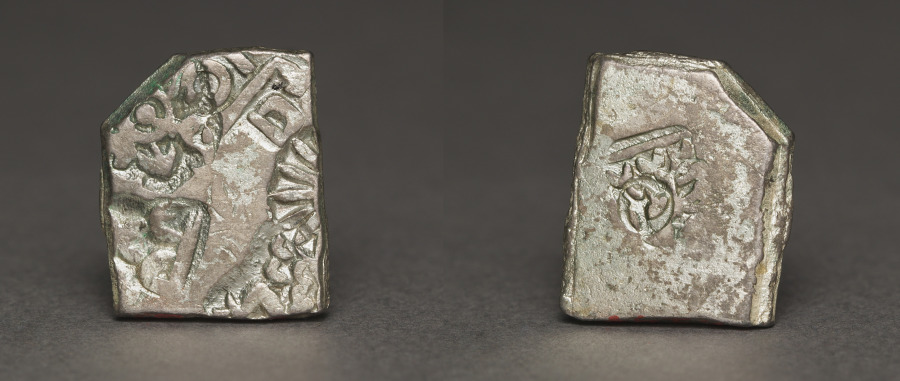

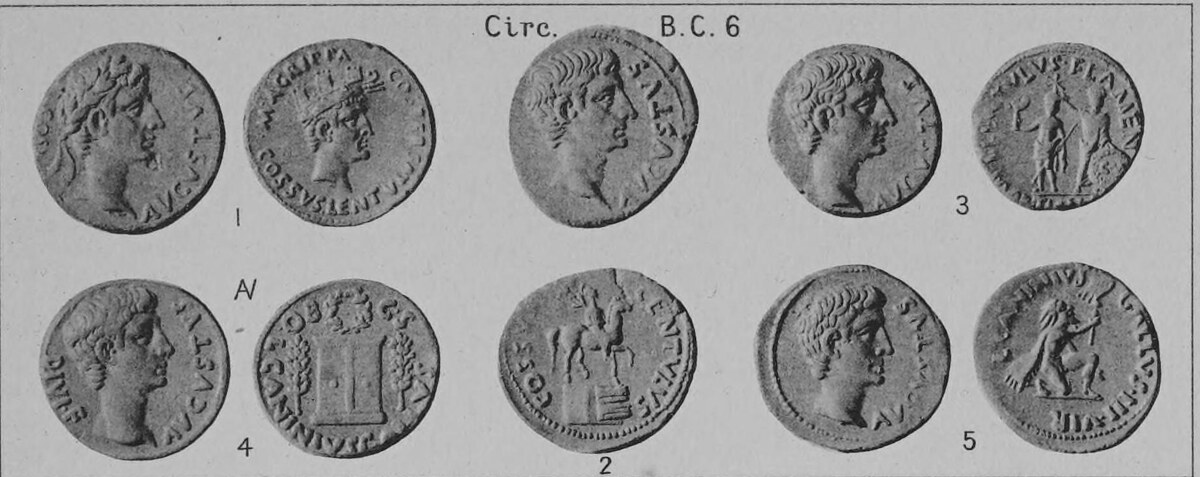
There is little evidence of a standard of value in currency hnvinobeen adopted. When no specific mention is made of the standard, the unit was probably the cow.Macdonell, A. A. & Keith, A. B., Vedic Index of Names and Subjects, vol. 1 (1912), s.v. Kraya
Hollow marks: entries elsewhere that share this era's money (Roman denarius); the 2 farthest are listed below, not drawn.
List of entries (6, and 7 elsewhere)
- 1 Cows as unit of value and wergild in Vedic India 1500 BC–300 BC
- 2 Nishka gold pieces 1200 BC–500 BC
- 3 Punch-marked karshapanas 500 BC–150 BC
- 4 Arthashastra: state mint and pana coins 300 BC – AD 300
- 5 Barygaza: Roman coin exchanged at a profit AD 40–AD 70
- 6 Gangetic India: cowries in the market AD 400–AD 405
Elsewhere
- a Sri Lanka: a king judges Roman coin by its weight Taprobane, AD 41
- b Ptolemaic grain banks Egypt, 305 BC
- c Koson gold staters, mid-1st century BC Orăștie Mountains, 50 BC
- d Palmyra, AD 137: customs dues reckoned in denarii Palmyra, AD 137
- e Royal coinage of Tigranes the Great Artaxata, 89 BC
- Rome: the three moneyers, a magistracy of the Republic Rome, 300 BC
- Gaul before the Roman conquest: gold and silver kept in sacred lakes and precincts Tolosa, 150 BC
Early modern 1500–1899
19 entries, 1505–1939

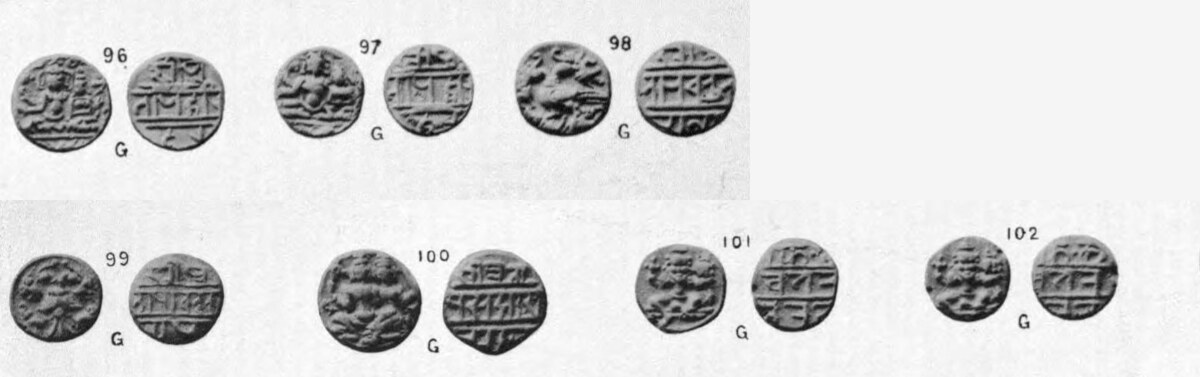
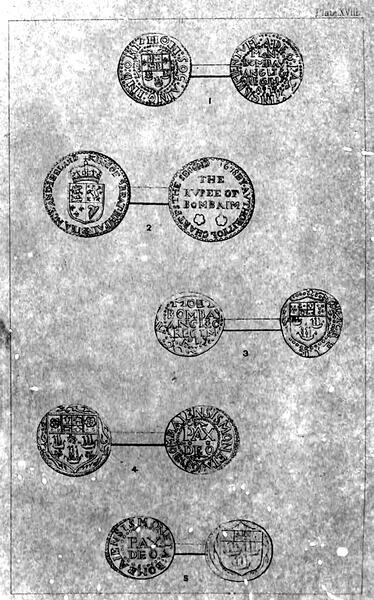
When the Kings go to war they pay all the Nayres who serve therein, even though they be in the service of other Lords, their daily wages, that is to say, four taras each, every day (which contains five reis).The Book of Duarte Barbosa, transl. M. L. Dames, vol. II (Hakluyt Society, 1921), vol. II, p. 52
Hollow marks: entries elsewhere that share this era's money (Cowrie shells, Rupee) or that its sources name; the 5 farthest are listed below, not drawn.
List of entries (19, and 8 elsewhere)
- 1 Calicut, c. 1505–18: coin weighed and assayed, debts by custom 1505–1518
- 2 Calicut, c. 1505–18: fanams, taras and the king's gold 1505–1518
- 3 Malabar, c. 1505–18: the right to strike coin 1505–1518
- 4 Vijayanagar, c. 1505–18: the gold pardao, current beyond the kingdom 1505–1518
- 5 Albuquerque opens the Goa mint (1510) 1510
- 6 Bengal, c. 1512–15: cowries against the silver tanka 1512–1515
- 7 Gujarat: a unit that is “nought but a name” 1512–1516
- 8 Bombay: the company's 'Rupee of Bombaim' 1677–1693
- 9 East India Company coins in the Mughal name 1686–1838
- 10 East India Company: indigo as a remittance to London 1786–1804
- 11 Leh: apricots for wool by weight 1820–1822
- 12 Bengal indigo advances: debt repaid only in the crop 1830–1860
- 13 The 'Company's rupee' of 1835 1835–1862
- 14 Tribute in goats and gold dust: Chilas, Bunar and Hunza (today in India) 1842–1880
- 15 Sikkim: wool and musk for rice 1849
- 16 The 1870s shift from silver to gold (today in India) 1871–1935
- 17 Car Nicobar: coconuts as currency 1875–1939
- 18 Naga hills: iron chabili, conch shells and salt 1880–1921
- 19 Oman, 1895–1914: the Maria Theresa thaler, the rupee and imaginary coins (today in India) 1895–1914
Elsewhere
- a Bengal, c. 1512–15: cowries against the silver tanka Malacca c.1512
- b Tribute in goats and gold dust: Chilas, Bunar and Hunza Hunza 1869
- c Silver against gold, 1871–1935: what silver money lost in India and China India, 1871
- Timbuktu: unstamped gold and cowries Tombuto, 1510
- Classical gold standard London, 1871
- The 1870s shift from silver to gold Denmark 1872
- The 1870s shift from silver to gold Sweden 1872
- The 1870s shift from silver to gold Norway 1875
Modern 1900 to today
6 entries, 1901–2026
Even in the ordinary everyday life of the village there is a constant giving and receiving of presents.Radcliffe-Brown, A. R., The Andaman Islanders (1922), ch. I, ch. I, economic life of the local group
What served as money share of 7 mentions
Hollow marks: entries elsewhere that share this era's money (Rupee).
List of entries (6, and 3 elsewhere)
- 1 Todas: funeral gifts, in buffaloes and later rupees 1901–1902
- 2 Andaman Islands: gifts, not barter 1906–1908
- 3 India 2016: demonetisation (coercive note withdrawal) 2016–2018
- 4 Indian household gold as savings 2016–2023
- 5 India: bitcoin legal, banks' ban struck down 2018–2026
- 6 The e-rupee retail pilot 2025–2026
Elsewhere
- a Uganda Agreement, 1900: hut and gun tax Kingdom of Uganda, 1900
- b The Mahra country, c. 1900: frankincense sold for thalers and rupees Qishn, 1898
- c Silver against gold, 1871–1935: what silver money lost in India and China India, 1871
What this cannot show
- How much money of each kind was in use: the marks count entries, not coins, notes or goods.
- A census: the atlas seeks out money made without a state, so an era with few entries is not an era with little money.
- The past's borders: entries are placed by today's, and the same money often ran beyond them; see the map.
Sources quoted on this page
- Macdonell, A. A. & Keith, A. B., Vedic Index of Names and Subjects, vol. 1 (1912), s.v. Kraya
- The Book of Duarte Barbosa, transl. M. L. Dames, vol. II (Hakluyt Society, 1921)
- Radcliffe-Brown, A. R., The Andaman Islanders (1922), ch. I