Money in Philippines
Pera sa Pilipinas
Entries placed by today's borders.
Entries 13, in 2 eras
Span 1521–2013
Kinds of money Barter, no money 4, Spanish dollar 3, Rice 2, Gold by weight 1, Cloth 1, and 2 others
W ithin present-day Philippines, the atlas places 13 entries, by their main place or a dated one, from 1521 to 2013. The oldest is Cebu and Mactan, 1521: tribute refused, then demanded (1521); the most recent, Cebu, 1960s–2013: farmers barter produce, valued at peso prices (1960–2013). The money named most often is Barter, no money, in 4 entries.
The word for money
- Tagalog salapî: the tostón, a half-peso coin, and then coin of every kind dictionaries disagree. Noceda, J. de and Sanlúcar, P. de, Vocabulario de la lengua tagala (Manila, 1860), s.v. salapí More on the word for money →
Early modern 1500–1899
10 entries, 1521–1815

They are ready to trust and accommodate freely whoever they know treats them fairly, and does not fail in his payments to them when these are due.Antonio de Morga, Sucesos de las Islas Filipinas (Mexico, 1609), ch. VIII, transl. in E. H. Blair and J. A. Robertson (eds.), The Philippine Islands 1493-1898, vol. XVI (Cleveland, 1904), vol. XVI, ch. VIII
What served as money share of 10 mentions
Hollow marks: entries elsewhere that its sources name; the farthest is listed below, not drawn.
List of entries (10, and 2 elsewhere)
- 1 Cebu and Mactan, 1521: tribute refused, then demanded 1521
- 2 Cebu, 1521: gold for iron, by the piece 1521
- 3 Limasawa, 1521: coin refused for a knife 1521
- 4 Palawan, 1521: copper wire valued, and a ransom in food 1521
- 5 Philippines, 1570s–1609: tribute of eight reals, paid in hens, rice and cloth 1570–1609
- 6 Manila, 1571–1815: Chinese silk for silver reals 1571–1815
- 7 Manila, 1592–1602: the pancada, a forced wholesale purchase 1592–1602
- 8 Acapulco and Manila, 1593–1767: silver shipped beyond the cap (today in the Philippines) 1593–1767
- 9 The Manila galleon, 1593–1815: the crown's cap on silver (permiso) (today in the Philippines) 1593–1815
- 10 Manila, 1604–1815: boletas, shares of galleon space sold and pledged 1604–1815
Elsewhere
Modern 1900 to today
3 entries, 1903–2013
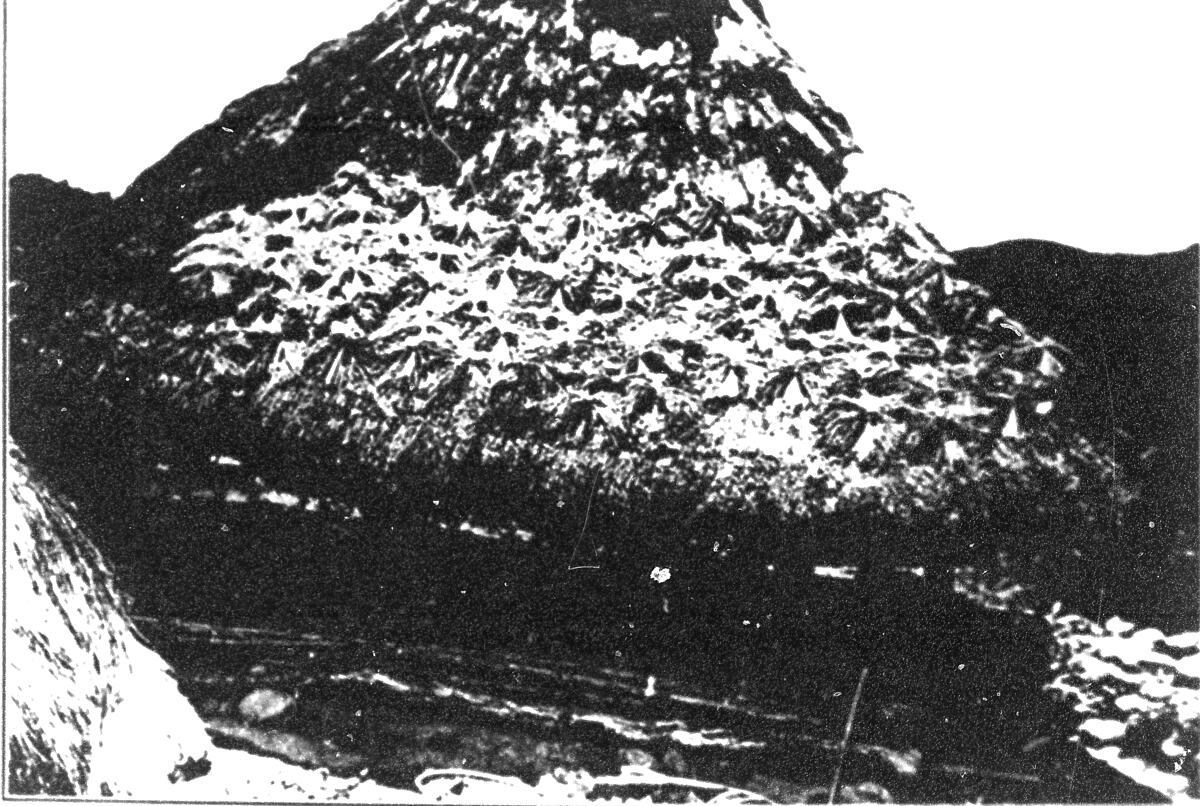

Palay is at all times good money, and it is the thing commonly employed in exchange.Jenks, The Bontoc Igorot (Manila: Ethnological Survey, 1905)
List of entries (3)
What this cannot show
- How much money of each kind was in use: the marks count entries, not coins, notes or goods.
- A census: the atlas seeks out money made without a state, so an era with few entries is not an era with little money.
- The past's borders: entries are placed by today's, and the same money often ran beyond them; see the map.
Sources quoted on this page
- Antonio de Morga, Sucesos de las Islas Filipinas (Mexico, 1609), ch. VIII, transl. in E. H. Blair and J. A. Robertson (eds.), The Philippine Islands 1493-1898, vol. XVI (Cleveland, 1904)
- Jenks, The Bontoc Igorot (Manila: Ethnological Survey, 1905)