Money in Russia
Деньги в России
Entries placed by today's borders.
Entries 54, in 3 eras
Span 903–2026
Kinds of money State notes 8, Gold coin 5, Barter, no money 4, Food rations 4, Cloth 3, and 28 others
W ithin present-day Russia, the atlas places 54 entries, by their main place or a dated one, from 903 to 2026. The oldest is Bulghar, c. 903–922: marten skins as dirhams (903–922); the most recent, The digital rouble: compulsory acceptance by retailers (2026). The money named most often is State notes, in 8 entries.
The word for money
- Russian деньги den'gi: silver coin; borrowed from Tatar/Chagatai täŋkä 'money; silver coin' dictionaries disagree. Vasmer, M., Russisches etymologisches Wörterbuch (1953-58), Russian ed. trans. Trubachev, s.v. деньга́, via StarLing, s.v. деньга́ More on the word for money →
Middle period 500–1499
8 entries, 903–1502
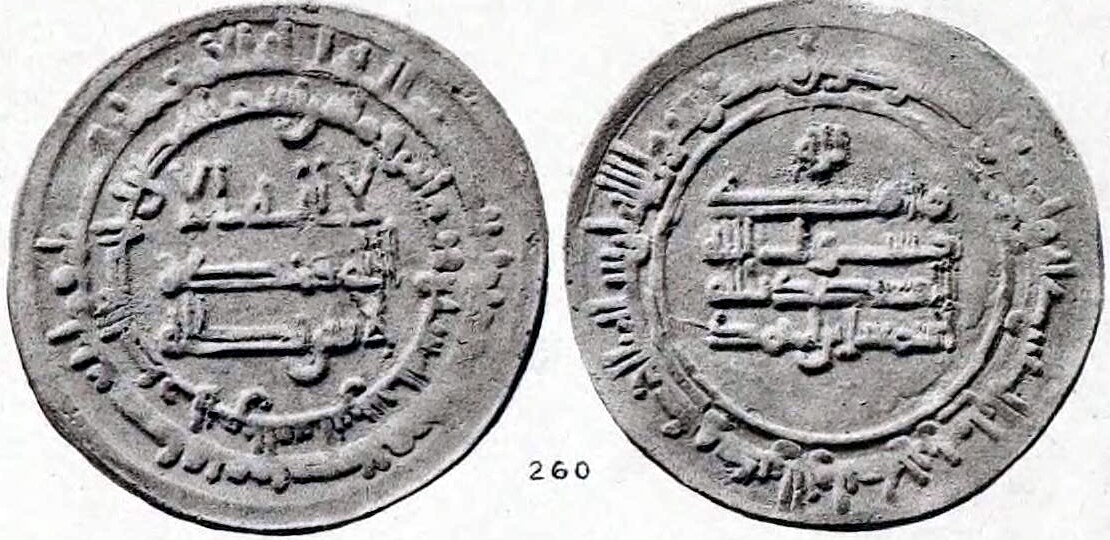
we could find nothing to buy with gold and silver, but only with linen or other tissues, and of those we had none.William of Rubruck, The Journey of William of Rubruck to the Eastern Parts of the World, 1253-55, transl. W. W. Rockhill (Hakluyt Society, 1900), p. 90
What served as money share of 14 mentions
Listed below, not drawn (too far away for this map): entries elsewhere that share this era's money (Dirham, Grosso, Marten and sable, Metal rings, Squirrel skins).
List of entries (8, and 8 elsewhere)
- 1 Bulghar, c. 903–922: marten skins as dirhams 903–922
- 2 Bulghar, c. 903–922: the king's levies in kind 903–922
- 3 The Rus on the Volga, 922: furs and captives sold for dirhams 903–922
- 4 Khazaria, c. 930–951: the king's tolls and dues in kind 930–951
- 5 Rubruck, 1253: cloth, not gold, buys food on the steppe 1253
- 6 Golden Horde coinage: aspers and silver sommi 1330–1345
- 7 Novgorod: from skins to foreign coin to its own silver 1410–1447
- 8 Circassia, c. 1500: no coin inland; prices reckoned in boccassini, a piece of cloth for a shirt 1490–1502
Elsewhere
- Viking-Age Denmark: silver paid by weight, hoards cut to øre units Denmark, 900
- Dubrovnik, 1337-1394: the commune's coin, where even a good copy was a crime Dubrovnik, 1337
- Ivan Alexander's charter to Venice, 1352: dues in perperi Varna, 1352
- Sámi fur tribute Swedish Lapland, 870
- Moldavia, 1370s–1690s: debased groshes, Dabija's copper shillings and copies of foreign coin Suceava, 1373
- Gotland's weighed silver economy Gotland, 860
- Fur money in Rus' and Muscovy Kiev, 859
- Viking-Age weighed silver: balance weights at Birka and Hedeby, and ring money Birka, 850
Early modern 1500–1899
14 entries, 1630–1930

no skins of any kind he was obliged to buy them in the open market; if he had neither skins nor money he was locked up.F. A. Golder, Russian Expansion on the Pacific, 1641-1850 (1914), pp. 27-28 and n. 48
What served as money share of 24 mentions
Listed below, not drawn (too far away for this map): entries elsewhere that share this era's money (Brick tea, Marten and sable, Squirrel skins).
List of entries (14, and 4 elsewhere)
- 1 Yasak: fur tribute in Siberia 1630–1700
- 2 Russia, 1707–08: Peter I strikes tymfs of Polish design to pay his troops in Poland 1707–1708
- 3 Kiakhta: barter by decree 1728–1850
- 4 Siberian coin: a copper coinage current only in Siberia 1763–1781
- 5 Kabarda and Balkaria, 1807–08: a sheep for six arshins of linen, tribute in sheep, salt by barter 1793–1808
- 6 Chukchi trade standards: tobacco and tea 1821–1901
- 7 Nevyansk works: the payok, a rye ration beside a small cash wage 1828
- 8 Siberian gold fields: the advance, the store book and the next contract 1837–1879
- 9 Siberian gold fields: gold dust paid for smuggled spirits 1843–1870
- 10 Siberian gold: assay receipts and gold assignats 1843–1879
- 11 Nerchinsk and Altai crown gold fields: proviant and a token wage 1849–1861
- 12 North-east Siberia: priced in roubles, paid in tea and tobacco 1866–1867
- 13 Northern Siberia: reindeer and squirrel skins as units of value 1880–1930
- 14 Russia's gold rouble: Witte's reform, 1895–1897 1887–1914
Elsewhere
- Tsaidam: priced in sheep Tsaidam, 1845
- Mongolia: sheep, brick tea and squirrel skins as units of account Mongolia, 1870
- Marturina: marten-skin tax money Slavonia, 1018
- Tea bricks Lhasa, 1000
Modern 1900 to today
32 entries, 1910–2026


Treasury bonds of the Omsk and Archangel Governments, bearing interest, used as legal tender in the areas controlled by these Governments.Currencies after the War: a survey of conditions in various countries, compiled under the auspices of the International Secretariat of the League of Nations (London: Harrison, 1920), 'Russia', p. 96, list item (f)
Listed below, not drawn (too far away for this map): entries elsewhere that share this era's money (Hard-currency certificates, Tsarist rouble notes) or that its sources name.
List of entries (32, and 8 elsewhere)
- 1 Lena goldfields: talons on the company stores 1910–1912
- 2 Russia suspends the gold standard, 1914 1914–1917
- 3 Soviet Russia: gold and foreign money seized, 1917–22 1917–1922
- 4 The civil war's many issuers of money, 1917–22 1917–1922
- 5 Tsarist notes at a premium over Soviet notes, 1917–22 1917–1922
- 6 Archangel's northern ruble, tied to sterling, 1918–19 1918–1919
- 7 Siberia, 1918–19: imperials hoarded, shop money and playing cards 1918–1919
- 8 War communism: the attempt to abolish money, 1918–21 1918–1921
- 9 Prison labour paid in money, 1919–22 1919–1922
- 10 Far Eastern Republic: a gold standard with no paper, 1921 1920–1922
- 11 The end of the sovznak, 1921–24 1921–1924
- 12 Hyperinflation: Russia / USSR (Ruble) 1922–1924
- 13 The chervonets, 1922–24 1922–1924
- 14 Solovki: rations, roubles from home, the ration at cards 1923–1925
- 15 BAMlag: bons and kitchen coupons 1932–1938
- 16 Kolyma: gold paid for in camp scrip 1939–1941
- 17 Tyumen prison: goods for goods with a warder 1945–1953
- 18 Norilsk: polar pay, and chits for prisoners 1945–1955
- 19 Steplag and Berlag: wages from May 1952 (today in Russia) 1949–1954
- 20 Vorkuta: the bread ration as payment, food by the norm 1950–1951
- 21 Ivdellag and Ust-Vymlag: earnings held by the camp 1950–1954
- 22 Vorkuta: wages from 1951 1951–1956
- 23 Dal'stroi: free workers' pay, the State Loan and the gold quota 1952–1955
- 24 Mordovian camps: clothing priced in bread 1953–1955
- 25 Moscow, 1961: trading foreign money made a capital crime, retroactively 1961
- 26 Soviet Union: Beriozka shops and Vneshposyltorg certificates 1965–1988
- 27 Ural francs: a private note, later factory scrip at Serov, 1991–97 1991–1997
- 28 Hyperinflation: Russia (Ruble) 1992
- 29 Russian barter and veksels 1992–1999
- 30 Russia, 1990s: cash dollars as savings 1993–1999
- 31 Russia, 1990s: wages paid in goods 1996–1997
- 32 The digital rouble: compulsory acceptance by retailers 2026
Elsewhere
- Urga, 1911–1913: debts to Chinese firms and a Chinese bank's notes after independence Urga, 1910
- North Manchuria: trade still in rouble notes, 1917–21 Harbin, 1917
- Turkestan and Bukhara, 1920: Kerensky notes at a premium Tashkent, 1918
- Tsarist notes abroad: Berlin and the Baltic, 1918–20 Berlin, 1918
- Transcaucasia, 1918–24: three republic currencies, then one Transcaucasian rouble at 1 : 100 : 150 Tiflis, 1918
- Odessa, 1919: imperial notes at a premium Odessa, 1919
- Steplag and Berlag: wages from May 1952 Dzhezdy 1952
- Cuba: the peso, the end of the CUC and state dollarisation Havana, 2019
What this cannot show
- How much money of each kind was in use: the marks count entries, not coins, notes or goods.
- A census: the atlas seeks out money made without a state, so an era with few entries is not an era with little money.
- The past's borders: entries are placed by today's, and the same money often ran beyond them; see the map.
Sources quoted on this page
- William of Rubruck, The Journey of William of Rubruck to the Eastern Parts of the World, 1253-55, transl. W. W. Rockhill (Hakluyt Society, 1900), p. 90
- F. A. Golder, Russian Expansion on the Pacific, 1641-1850 (1914), pp. 27-28 and n. 48
- Currencies after the War: a survey of conditions in various countries, compiled under the auspices of the International Secretariat of the League of Nations (London: Harrison, 1920), 'Russia'